Portland, OR · Garage Door Service
Aloha's commercial buildings mostly date to the 1980s and 90s. Our Portland crew knows the sectional steel and rolling doors that era put in, and what it takes to keep them running.
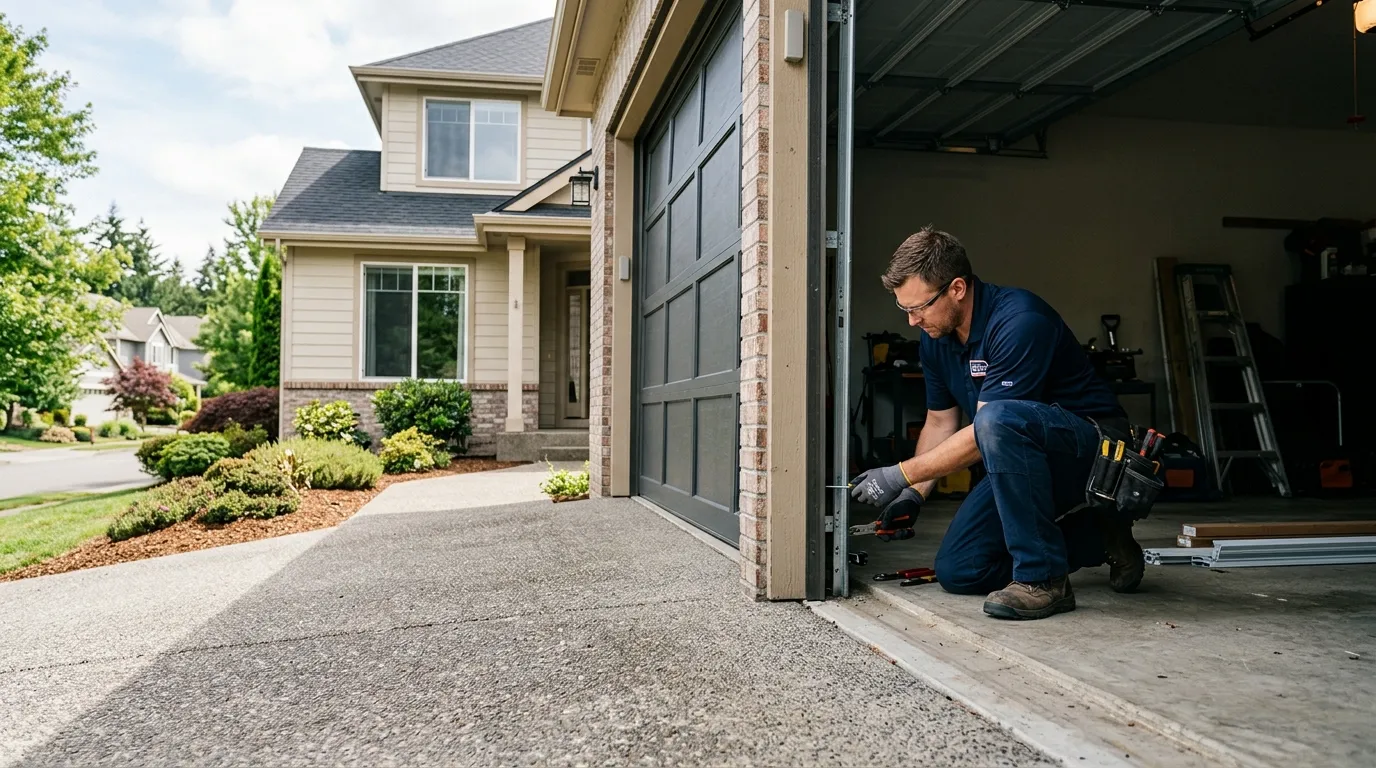
A crew comes out from Portland, about 11 miles in, so we're not showing up cold - we ask what the door is doing before we load the truck, because a commercial rolling door acting up is rarely the same fix as a sectional steel door binding on its track. Aloha's warehouses, shop buildings, and strip-center bays mostly went up in the 1980s and 90s, which means we're usually looking at galvanized steel track, standard-lift torsion springs sized for the door weights of that period, and openers that have been swapped out at least once by now. We test cycle count, check the springs against the door's actual weight (a lot of these were resprung wrong at some point), and look at the jamb and header for the kind of wear that shows up after three decades of daily open-close use. If it's a photo-eye or safety-reversal problem, that gets fixed before anything else, full stop - a commercial door that doesn't reverse is a liability, not a maintenance item to schedule around.
For buildings from this stretch of the service area's 1980s-90s construction wave, we carry replacement torsion springs sized to match the door weight rather than guessing off the old spring's wind count, galvanized roller and track hardware, and standard commercial-grade cables. Aloha sits in a mild climate with occasional freeze (per regional climate data), so we're not dealing with the corrosion or ice-loading a colder region would see - but a hard freeze a few times a season is still enough to stiffen grease in an old opener chain or crack a dry seal, so we stock lubricant and weatherseal for that. What we don't carry on the truck is anything obsolete - some of the original 1980s panel sections and certain older commercial opener boards just aren't made anymore, and if a building still has one, we're ordering the part, not pulling it from stock.
We don't have a flat number to post here, and we're not going to make one up. What we can tell you is what drives the cost on a building of this era: whether it's a spring swap versus a full section replacement, whether the opener is original (harder to source boards for) or already been replaced once, and whether the track needs realignment or full replacement. A door built in the early-to-mid 1980s that's had regular use for over 40 years is a different estimate than one installed in the 2000s. We price the job after we've looked at it, not off a phone description - a bent track can look like a spring problem until someone's hands are on it.
The honest answer: sometimes the repair costs more than it should because the door is old enough that matching parts - specific panel sections, certain commercial opener boards - just aren't stocked anywhere and have to be special-ordered, which adds time we can't shorten. On a building running two or three cycles a day for decades, we'll also sometimes find that what looked like a simple roller replacement is really a symptom of a track that's been slowly racking out of square, and fixing the roller without fixing the track just buys you a few months. And there's a point, usually with a door original to a 1980s build with a worn-out low-headroom track configuration, where replacing the whole unit is the better call than patching a system that's fighting its own hardware. We'll tell you when we hit that point instead of billing you to find out twice.
Most of the wear we see on commercial doors in this part of the service area traces straight back to age and cycle count - buildings here cluster around a median build year in the 1980s, so a lot of the original torsion springs and track hardware are simply past their rated life. The area's climate is mild with occasional freeze, not the deep-cold conditions that crack steel, so it's less about weather damage and more about decades of daily use on hardware that was never meant to run this long without a spring change. On some buildings we also see openers and safety sensors added or replaced piecemeal over the years, which means mismatched components doing a job they weren't matched to do.
We run out of Portland, about 11 miles from Aloha. We don't keep a branch out there, so scheduling accounts for the drive - we're upfront about that rather than promising a response time we can't back up.
A lot of the buildings out that way were built in the 1980s and 90s, so yes - some panel sections and older opener boards from that era aren't made anymore, and we order them rather than pretend a universal part is a perfect match.
The area sees a mild climate with occasional freeze, not the extended deep cold some regions get. It's usually not enough to crack steel, but it can stiffen opener chain grease or crack an old, dried-out seal a few times a season.
Call now or request a free quote - same-day service on most repairs, upfront written pricing.