Portland, OR · Garage Door Service
Dented or cracked garage door panel in Portland? We match panels on 1960s-2000s doors and explain when replacement beats a full door swap.
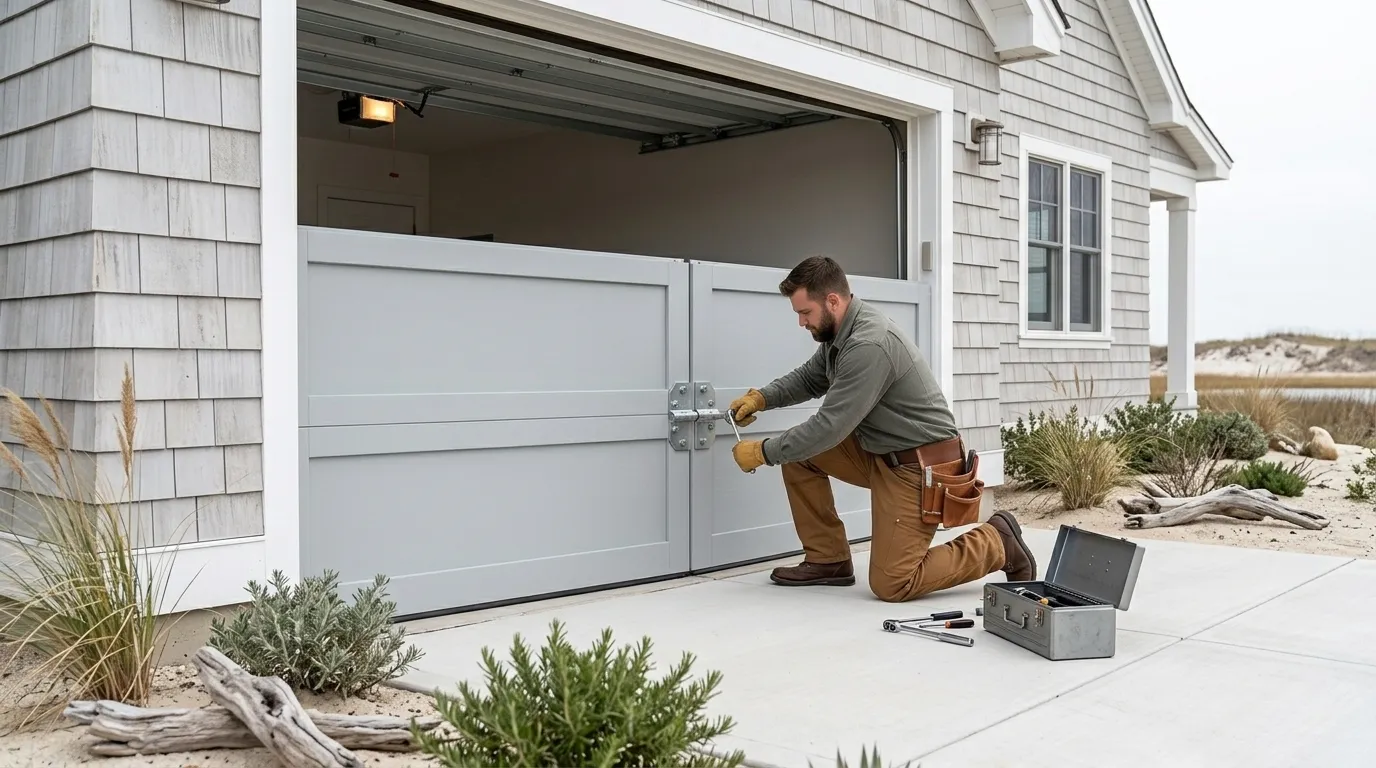
A panel is the section of the door, usually one of four to eight stacked between the top and bottom rollers. You're probably looking at a dent from a bumper tap, a crack along a seam, or a section that's buckled inward where the roller bracket pulled loose. On steel sandwich doors - the kind on most houses across the Portland service area, where the median build year sits at 1982 and the stock runs from 1964 through 2006 - a single bent panel often means the whole track alignment shifted, not just cosmetic damage. Check the seam between the damaged panel and its neighbors: if there's a gap or the door binds when it travels, the frame behind that panel is bent too, not just the skin. Wood composite doors from the same era show a different failure - the outer layer delaminates and swells at the bottom panel first, usually where moisture sits against the slab. Either way, the fix depends on whether your door's manufacturer still makes a matching panel or whether the whole section has to be fabricated or the door replaced outright.
Single panels on some door lines are sold separately and bolt in without touching the springs, so if you're comfortable disconnecting the opener and supporting the door with clamps, a cosmetic panel swap on a lightweight aluminum or vinyl door is within reach for a confident DIYer. Steel sandwich panels are a different story - the color match, the exact rib profile, and the insulation core rarely match anything at a hardware store, and a mismatched panel looks worse than the dent did. If the damage is on a bottom panel, don't touch it yourself: that's where the bottom brackets carry cable tension, and a panel that's been fighting a stretched cable can let go under load. Our honest limitation here: we don't stock every panel profile on the shelf. Older or discontinued door lines sometimes mean a multi-week wait on a factory-matched panel, and we'll tell you that up front rather than quote a date we can't hit.
We start by identifying the door manufacturer and model, since panel replacement only works if we can source a matching section - otherwise the door needs full replacement instead. If the frame behind the panel is bent, we straighten or replace the stile before the new panel goes in, because bolting a good panel to a warped frame just moves the binding somewhere else. We pull the damaged section, transfer hardware - hinges, rollers, and end caps - to the new panel, and rebalance the door once it's back together, since even a single-panel swap changes the door's weight distribution enough to throw off spring tension on older torsion setups. On multi-panel damage, or on doors where the manufacturer no longer makes a matching profile, we'll say so plainly and price a full door instead of forcing a patch that won't hold color or alignment. Every job ends with a full-cycle test under the opener, not just a hand-lift, since that's the only way to catch a rebalance problem before it becomes a call-back.
Across the roughly 30 named areas we cover, from West Haven-Sylvan and Raleigh Hills in close to Cully and Concordia further out, the housing stock leans heavily 1980s and 90s, and that generation of steel doors used a thinner gauge skin than what's sold today. Thin steel dents easily from a bumper, a bike, or a stray basketball, and once it dents, the seam between panels loses its rigidity and starts working loose at the hinges. Portland's climate band is mild with occasional freeze rather than deep winter cycling, so panels here fail more from mechanical impact and slow moisture creep at the bottom section than from thermal expansion cracking you'd see in harsher climates. With 101,547 owner-occupied houses in the service area, and a median household income of $102,931, we see a real mix of decisions - some owners replace a single panel to stretch a door another five or ten years, others use the damage as the trigger to replace the whole door with a better-insulated one.
Sometimes. If your door's manufacturer still makes your model and the paint hasn't faded much, we can order a close factory match. Doors older than about 15-20 years often have discontinued colors or profiles, in which case a full panel run or a new door is the more honest fix.
There's almost always some difference from sun fade on the old panels, even with an exact factory match. It's usually subtle from the street. If the whole door is faded and chalky, we'll tell you a single panel will stand out more than you'd like.
Usually, if the frame isn't bent and the manufacturer still stocks the panel. Once you're replacing two or more panels, straightening a bent frame, or sourcing a discontinued profile, a full door often ends up close in price and comes with a warranty the patch doesn't.
Run the door by hand with the opener disconnected. If it travels smooth and only the one panel looks damaged, that's likely a panel job. If it binds, drags, or the track pulls away from the wall, the frame or track is compromised and a panel swap alone won't fix it.
Call now or request a free quote - same-day service on most repairs, upfront written pricing.