Portland, OR · Garage Door Service
Bethany homes mostly went up around 2003, a generation newer than much of Portland's stock. That changes which panels fail and what a replacement job actually involves.
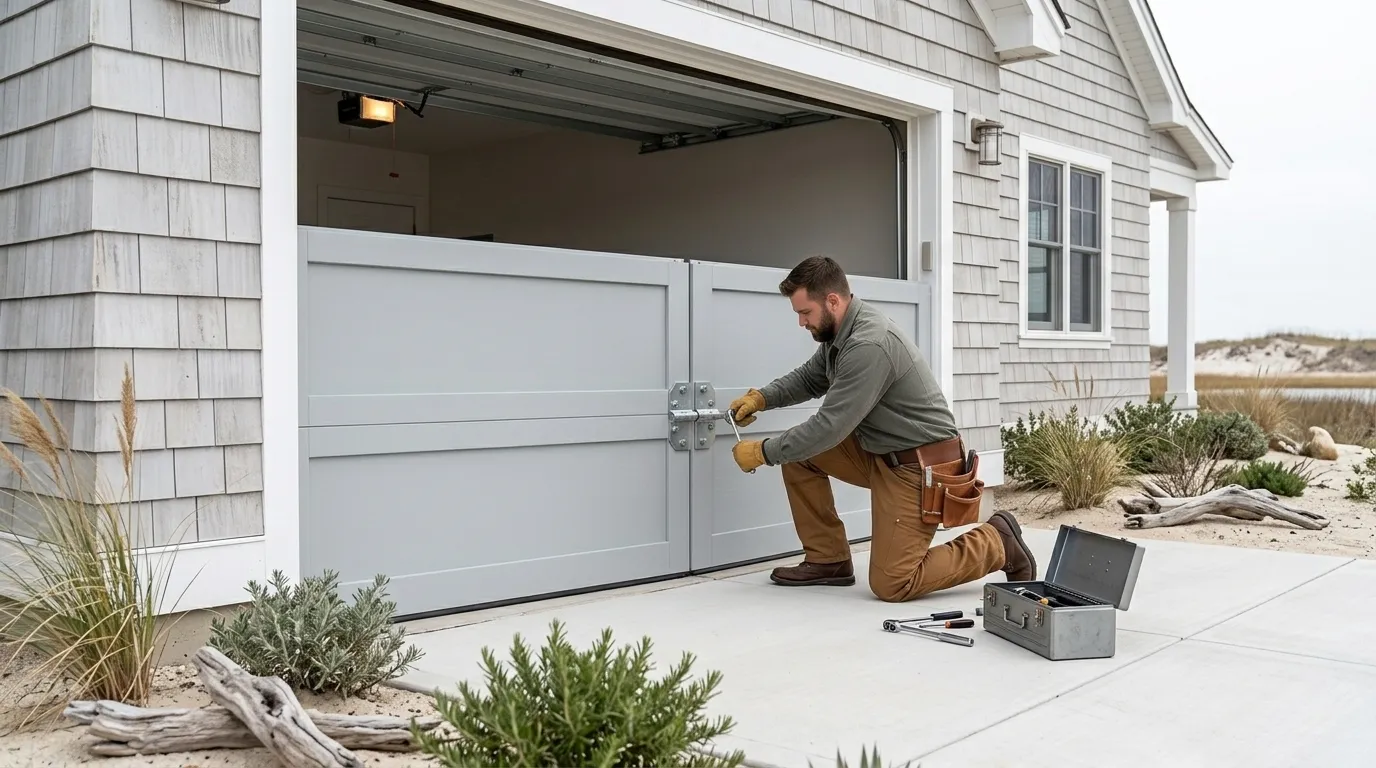
Most of Bethany went up around 2003, which puts the neighborhood a full generation ahead of the older Portland stock we also cover, where doors from the 1960s through the 1980s are common. That difference matters for panel work. A door built around 2003 is almost always a factory steel sectional with a standard panel height and a lift cable routed for a torsion spring setup - not the older extension-spring, single-panel doors you find on pre-1980 Portland houses. We stock replacement panels sized to fit these newer sectional runs, along with the matching end stiles and hinges. What we don't stock is anything for a door style that stopped being built decades ago; if your door happens to be older than the neighborhood average, we'll tell you that up front rather than order a part that won't match. Colors and window-lite patterns from the early 2000s builder-grade lines are the most common match requests we get out here, and we carry enough of that range to get a close fit on most jobs. When a panel run is discontinued outright, we say so before we quote, not after.
A single-panel swap on a sectional door costs less than replacing the whole door, and it costs less again when the door is newer and the track and hardware are still square - which is the case on most Bethany doors given the 2003 median build year. The price moves with how many panels are damaged, whether the springs still carry proper tension after the impact, and whether the track bent along with the panel. We don't publish a flat number here because the honest answer depends on what's actually behind the dent once we're on site. What we can tell you is that a job on a newer, still-square door runs cleaner and faster than the same repair on an older door with worn rollers and a track that's been fighting gravity for forty years.
The panel itself is rarely the hard part. What turns a straightforward swap into a longer job is hidden damage the homeowner didn't see: a bent track rail behind the dented panel, a stripped hinge that's been quietly loosening for months, or a spring that lost tension the day of the impact and nobody noticed until the door wouldn't lift. On a 2003-era door, we also check the opener bracket, since builder-grade openers from that period sometimes share a mounting point with the top panel and take a hit in the same collision. We won't swap a single panel and call it done if the track behind it is bent - that's a callback waiting to happen, and it's the kind of thing that looks fine for two weeks and then jams the door on a Sunday. If we find that, we'll show you before we close anything up.
A straightforward single-panel replacement on a door this age, with square hardware and no hidden track damage, is typically a same-visit job once the correct panel is confirmed on hand. What extends the timeline is almost always the ordering step: matching a specific window-lite pattern or a discontinued color from the early 2000s builder line can mean a wait for the part to arrive before we can schedule the install. We travel out to Bethany from Portland, about 9 miles, so we're not working from a local stock room - the part gets confirmed and brought with us on the scheduled visit rather than sourced on the spot.
If the panel is cosmetic-only - a dent with no crack, no bent track, and the door still runs smooth on the opener - a determined homeowner can sometimes handle a bolt-on panel swap with the right tools and a second set of hands. Where we'd tell you to stop and call someone: anything involving the torsion spring, which is under enough tension to cause a serious injury if released wrong, and anything where the door binds or drags after the panel goes in, which usually means the track shifted and needs to be reset square. Given that Bethany's housing stock is mostly newer sectional doors with standard torsion hardware, the spring is almost always part of the picture even on a single-panel job, which is the honest reason we don't recommend most of this as a DIY project here.
Yes. Bethany's housing mostly dates to around 2003, so doors are standard steel sectional units on torsion springs. A lot of older Portland housing still has doors from the 1960s-80s, sometimes on extension springs or older single-panel construction, which need different parts and a different repair approach.
No. We're based in Portland and travel out to Bethany for jobs, about 9 miles each way. We confirm the exact panel match before the visit and bring it with us rather than sourcing it locally on the day.
Usually, yes, if the door is a standard sectional style, which most Bethany doors are given the newer build year. The panel has to still be in production or closely matched. If the track behind the panel is also bent, that gets fixed at the same time or the new panel won't sit right.
Even a single-panel swap usually means loosening or resetting spring tension to get the panel out and the new one seated. On Bethany's mostly newer torsion-spring doors, that tension is high enough to cause injury if handled wrong, which is why we don't recommend this as a DIY step.
Call now or request a free quote - same-day service on most repairs, upfront written pricing.