Portland, OR · Garage Door Service
Worn rollers make Portland garage doors grind and stick, especially in homes built 1964-2006. Portland Garage Door Pros replaces rollers fast, done right.
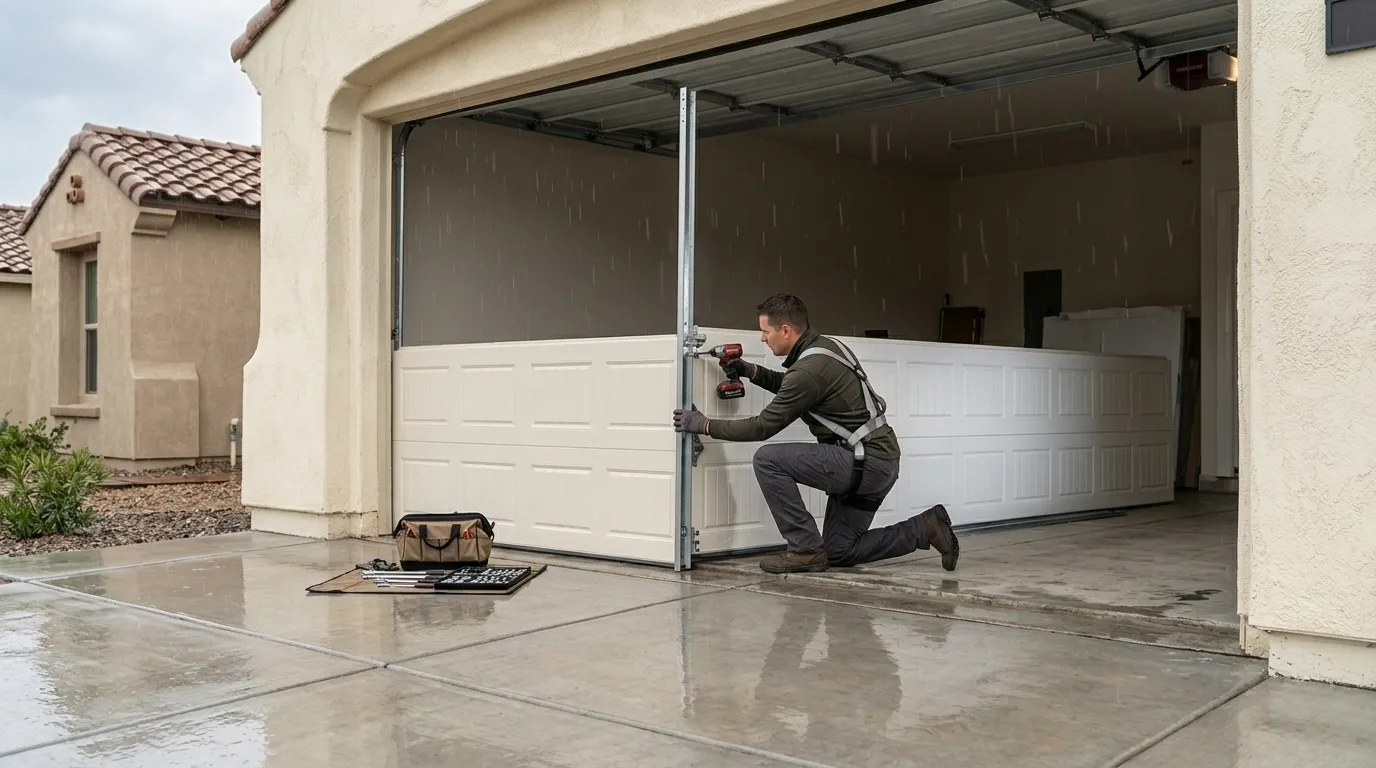
If your door groans, shudders, or jumps in the track every time it opens, the rollers are usually the reason, not the opener. Steel rollers wear flat on one side, nylon rollers crack or go egg-shaped, and either way the door starts riding rough in the track instead of gliding through it. You might hear a rhythmic thump as each bad roller hits the same spot in the track, or notice the door hangs up for a second before it catches and lurches forward.
A lot of the homes we work in across the Portland area were built between 1964 and 2006, with the median landing around 1982. That means original steel rollers on steel track, no nylon, no sealed bearings - hardware that was standard for the era and is well past its expected life in most of these houses now. On a two-car door with 10 rollers, it's common for half of them to be shot while the other half still look fine, which is why the door binds on one side before the other.
If the noise gets worse right after opening the door on a cold, damp morning, that's consistent too - metal contracts, grease stiffens, and a marginal roller that was quietly grinding all summer starts complaining out loud.
Swapping a roller on the bottom section of the door, away from the spring and cable system, is within reach for a homeowner with the right tools and some patience. You unbolt the roller bracket, slide the old roller out of the track, drop in the new one, and bolt it back. Nylon rollers with sealed bearings are a real upgrade over the original steel ones and run quieter.
Where it gets risky is the top rollers, the ones near the horizontal track and the spring assembly. Getting those out usually means releasing tension on the door or working close to a wound torsion spring, and that's where people get hurt - a spring under tension will move a steel bar hard enough to break bones. If your door has one spring across the top (common on many of these older single-door setups) rather than two, there's no redundancy if something lets go while you're working near it.
Our honest take: replace the bottom two rollers yourself if you're comfortable with hand tools and the door is currently working. If the door is already binding, off track, or making noise near the top corners, call it in rather than open up the spring side yourself.
We pull the door down, check every roller stem and bracket for wear, and replace the full set rather than just the ones making noise - a mismatched set of new and worn rollers just shifts the grinding to whichever ones are left old. We check the track for the dents and bends that bad rollers cause over time, since a straight track and a good roller have to work together or you're back to square one in a few months.
We use sealed nylon rollers as the standard replacement. They run quieter than the steel originals found in most homes built in that 1964-2006 window and don't need the periodic oiling steel rollers demand. While we're in there we check cable tension and hinge wear too, since a worn roller often means worn hinges on the same door - same age, same use.
One limitation worth saying plainly: if the track itself is bent or the door is badly out of square, new rollers alone won't fix the grinding. At that point we tell you it's a track or panel job, not a roller job, and price it that way instead of selling you rollers that won't solve it.
Two things push roller wear here faster than in a lot of places. First, the age of the housing stock: with most of the service area's homes built through the 1980s and 90s and F1's median year of 1982, a huge share of doors in this market are still running original steel roller hardware that's 30 to 60 years old. That hardware wasn't built to run forever - it was built to the standard of its decade.
Second, the climate. This area sits in a mild band with occasional freeze, which means rollers go through repeated cycles of damp, cold mornings and warmer afternoons rather than one hard winter and then months of dry stability. That cycling swells and shrinks the steel and track just enough, over years, to accelerate the flat spots and pitting that make rollers loud and rough. It's not dramatic weather - it's steady, repetitive weather, and that's exactly what wears bearing surfaces down over decades.
Put those two together - old steel rollers, mild but freeze-prone cycling - and you get the exact grinding, sticking door we see on service calls across this area, year after year.
Most double garage doors have 10 rollers, and single doors usually have 6 to 8, depending on the number of panels. When one goes bad it's common for a few others nearby to be close behind, since they've had the same age and use.
You can, but if your door is original hardware from the 1964-2006 era common across this area, the other rollers are likely close to the same wear. Replacing the whole set at once usually costs less than two separate visits.
Usually, yes, if worn rollers are the actual cause. If the track is bent or the door is out of square, rollers alone won't fix it - we check both before quoting the job so you're not paying for a fix that won't hold.
Call now or request a free quote - same-day service on most repairs, upfront written pricing.