Portland, OR · Garage Door Service
West Linn's garage doors mostly date to the late 1980s. Worn rollers on that era of hardware wear differently than newer stock - here's what to expect and what it costs.
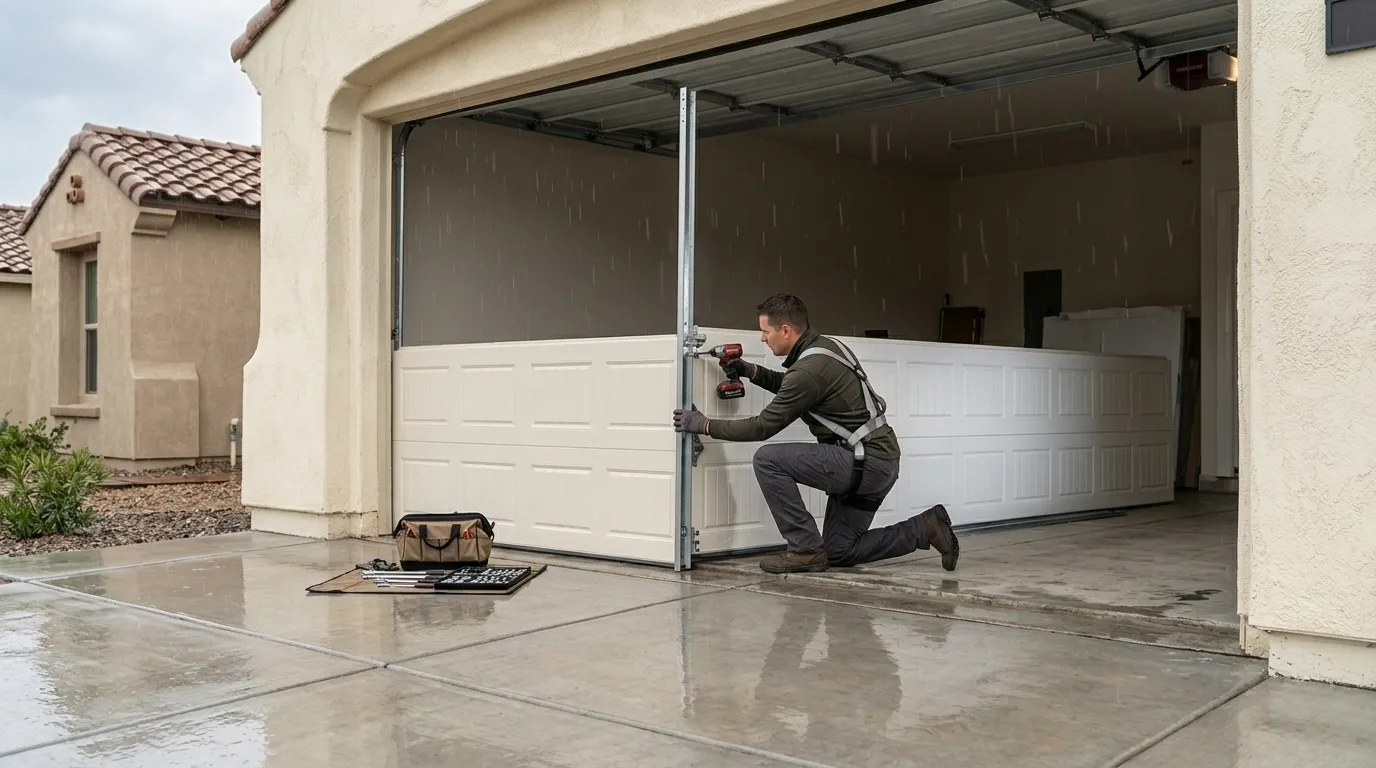
Rollers look like a bolt-on part, and on paper they are. The problem is what's around them. A lot of West Linn garages were built around 1988, and doors from that era often run steel rollers on tracks that have narrowed with age or picked up rust from decades of Willamette Valley damp. Swap a nylon roller into a track that's out of true and you get a door that binds two months later, not two years.
You can do this yourself if the door is a newer replacement unit with standard 2-inch track and you're comfortable pulling the door off its cables safely - that part matters more than the roller itself. What you can't easily judge from a ladder is whether the track itself needs resetting, which is common on houses this age where the bracket screws have worked loose over 30-plus years. If a roller keeps popping out of track after you've reset it once, that's a sign the fix isn't the roller - it's the alignment, and that's a job we'd rather look at in person than talk you through over the phone.
One honest limitation: we don't sell roller kits over the counter for DIY installs. If you want to do the work yourself, a hardware supplier is a better bet than calling us for parts alone.
We pull the door, check the track gap and bracket fasteners before we touch a roller, because on 1980s-era housing stock - which is most of what's in West Linn - a stretched or bent track is the more common culprit than the roller itself. If the track's fine, we swap the worn rollers for sealed nylon ones, which run quieter and don't need the periodic lubrication steel rollers do.
If the track brackets have pulled away from the jamb, which happens on houses this age when the original screws were undersized for the door weight, we re-set them into solid framing before the new rollers go in. Skipping that step is how a roller job turns into a second call three weeks later.
We check all the rollers on the door, not just the ones that are obviously worn, since a door that's run unevenly for years usually has more than one roller past its life. Cables and springs get a quick check too - not because we're upselling, but because a roller job on a door with a spring near failure is a wasted trip if the spring goes next month.
The signs are the same whether the rollers are steel or nylon: grinding or scraping as the door travels, a door that shudders or jumps at one or two spots in the track, or a roller edge you can see is chipped or flat-sided when the door's open. On older steel rollers common in houses built through the 1980s and into the 90s, you'll often hear it before you see it - a metallic rattle that gets worse as the door speeds up or slows down.
West Linn's mild, occasional-freeze climate doesn't crack rollers the way a harder freeze-thaw region would, but damp does its own damage - rust pitting on steel rollers and bearings that seize instead of spin. A roller that's seized rather than worn smooth is doing more damage to the track with every cycle, since it's dragging instead of rolling.
If the door only sticks in one exact spot every time, that's usually a track issue, not a roller issue - worth mentioning before you order parts for the wrong fix.
We cover West Linn from our Portland base, about 12 miles out, along with the other communities on this side of the metro. There's no local branch here - we're driving out for the appointment, so we ask for a description of what the door's doing (grinding, sticking, jumping) when you book, so the truck that shows up has the right rollers and track hardware for the job rather than a guess.
West Linn households run a fair bit above the wider service area's median income, and we mention that only because it tends to mean owners here go with the sealed nylon roller upgrade rather than a like-for-like steel swap - worth deciding before we arrive rather than at the door.
We don't quote a number sight unseen, because the honest range depends on whether it's a clean roller swap or a track reset comes with it. Across the wider Portland service area, the median household income sits at $102,931 against 101,547 owner-occupied houses, and pricing here reflects work on that broad range of housing stock - a straightforward roller swap on a newer door costs less than one that involves resetting bent track brackets on an older frame.
What we can tell you is what drives the cost up: track replacement instead of just resetting it, doing all the rollers instead of just the worst two or three, and any spring or cable work found during the same visit. We'll always tell you before the work starts, not after.
There's no fixed schedule - it comes down to material and use. Steel rollers on older doors, common in houses built through the 1980s here, tend to wear or rust out faster than the sealed nylon rollers we install now. A door cycled several times a day wears rollers faster than one used once.
We stock standard nylon and steel roller sizes on the truck, since most doors we see use one of a handful of common bearing and stem sizes. If a door needs an unusual roller size or the track itself needs custom work, that may mean a second visit.
Often, yes. On houses built decades back, track brackets can loosen or the track can bend slightly out of true. A roller that pops out of the track repeatedly, even after replacement, usually means the track needs resetting, not another roller swap.
The mild climate here with only occasional freeze doesn't crack rollers the way harder freeze-thaw regions do, but persistent damp causes rust pitting on steel rollers and can seize bearings over time, which drags on the track and speeds up wear elsewhere.
Call now or request a free quote - same-day service on most repairs, upfront written pricing.