Portland, OR · Garage Door Service
Cedar Mill homes mostly date to the early 1990s, a decade newer than the Portland average. That changes the rollers we pull and what we carry on the truck.
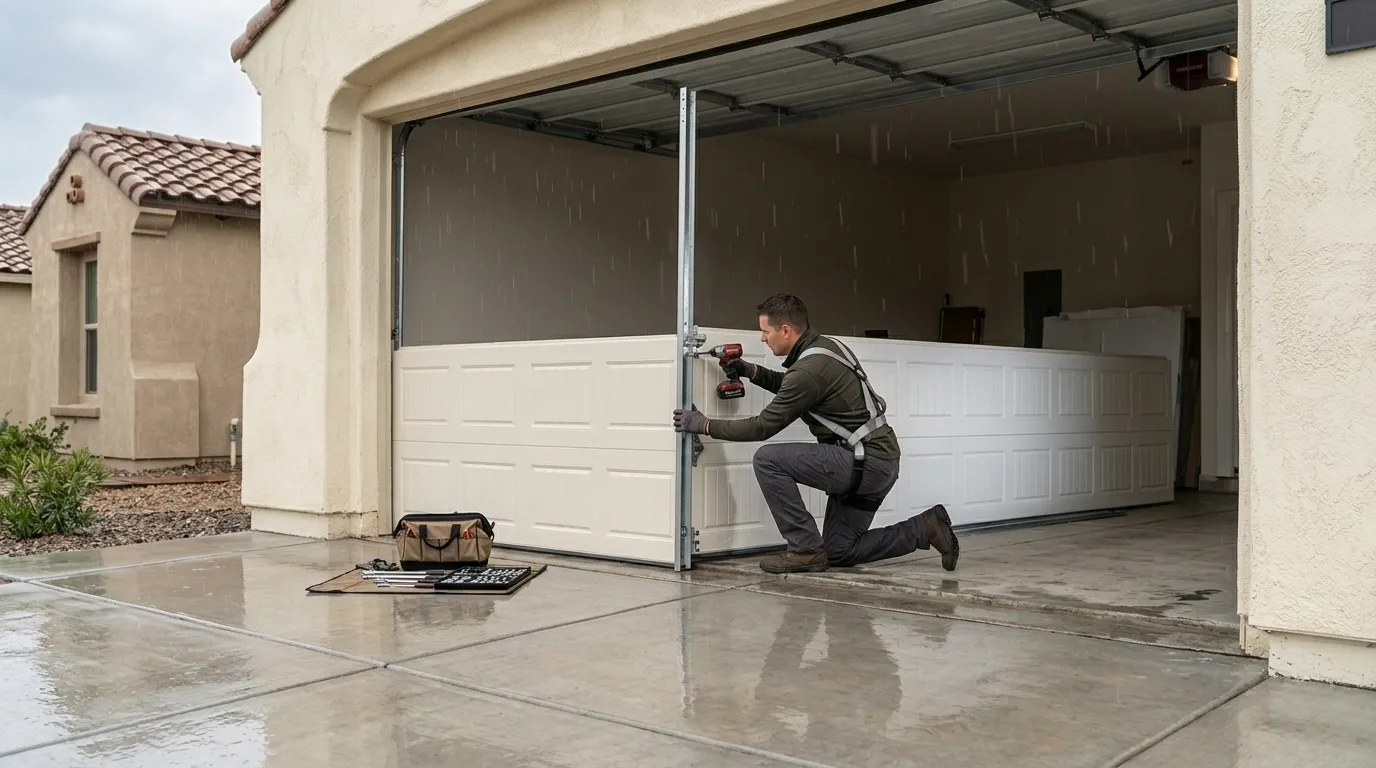
Cedar Mill's housing stock centers on 1992, a good ten years past the 1982 median for the wider service area. That gap matters more than it sounds. Doors built in the early '90s came standard with 10-ball steel rollers on stamped steel tracks, not the plastic-and-bearing setups you'd find on a house built in 2005. A full roller set on a double door usually means pulling ten to twelve rollers plus the end brackets they ride in, since the brackets on doors this age are often as worn as the rollers themselves.
What you pay depends on whether you're swapping steel-on-steel for the same and moving on, or upgrading to sealed-bearing nylon while the door is apart. Nylon costs more per roller but runs quieter and doesn't need the track lubricated as often, which is worth mentioning since Cedar Mill's median household income, at roughly $167,037, is well above the $102,931 average across the areas we serve - most owners here ask about the upgrade rather than the like-for-like swap. We'll quote both on site once we see what's actually installed and how the track has worn.
We run this job out of Portland, about 7 miles from Cedar Mill, so we're not parked around the corner - you're booking a truck that drives out, not a local branch. That's not a knock against the work, just a fact worth knowing before you call: we don't hold a same-day slot open here the way a shop based in the neighborhood might.
When you call, tell us the door's age if you know it and whether it's grinding, sticking on the way up, or has jumped the track. Roller wear on a 1992-era door usually shows up as noise first, then binding, then a full derail if it sits too long. Catching it in the noisy stage is the cheap version of this job.
The service area's climate band runs mild with occasional freeze, which isn't hard enough on hardware to crack steel rollers outright the way a true freeze-thaw region would. What actually wears out Cedar Mill's rollers is age and cycles - doors going up and down for over thirty years on original steel rollers, with the factory grease long gone. Once the bearing races inside those steel rollers dry out, you get the grinding sound before you get an actual jam.
Because the neighborhood's homes cluster tightly around that 1992 build year rather than spreading across many decades, we see the same failure pattern on a lot of these jobs: original steel rollers, original stem, tracks that have never been realigned. It's a more predictable fault than in an area with a mixed housing stock spanning 1960s ranches through 2000s builds, where we'd be guessing at what's actually on the door before we arrive.
For a job like this we stock both 10-ball steel rollers with standard 4-inch stems, which match most original hardware from the early '90s, and sealed-bearing nylon rollers for owners who want the quieter upgrade while the door's already open. We also carry replacement roller brackets, since on a door this age the bracket often needs swapping alongside the roller - the stem hole wears oval, not round, and a new roller in an old bracket just wears out again fast.
One honest limit here: if the track itself is bent or badly rusted rather than just worn, roller replacement alone won't fix the noise or the binding. We'll tell you straight if that's what we're looking at instead of selling rollers that won't solve the actual problem. Full details on the broader service, including what we do for other door types, are on our Portland roller replacement page; the Cedar Mill service area page has more on what else we cover out this way.
Almost always, yes. Most homes here were built around 1992, and builder-grade doors from that era came standard with 10-ball steel rollers on steel stems. Unless a previous owner upgraded, that's what we expect to find when we open the door up.
We stock the common 10-ball steel and sealed-bearing nylon rollers plus matching brackets, since those cover most of what's installed on doors from this build era. If your door has an unusual track width or an odd stem length, we may need to confirm the size before the visit.
Nylon runs quieter and doesn't need re-lubrication as often, which is why a lot of owners here choose it when replacing worn steel rollers anyway. It costs more upfront. If quiet operation isn't a priority for you, steel does the same mechanical job.
We come from Portland, about 7 miles away. We don't keep a branch or a parked truck in Cedar Mill, so we schedule the visit rather than offering a walk-up same-day slot the way a shop based right in the neighborhood might.
Call now or request a free quote - same-day service on most repairs, upfront written pricing.