Portland, OR · Garage Door Service
Aloha's 18,790 households sit mostly in 1980s builder-grade houses. We know the steel doors and short-span tracks that came standard here. Service from Portland.
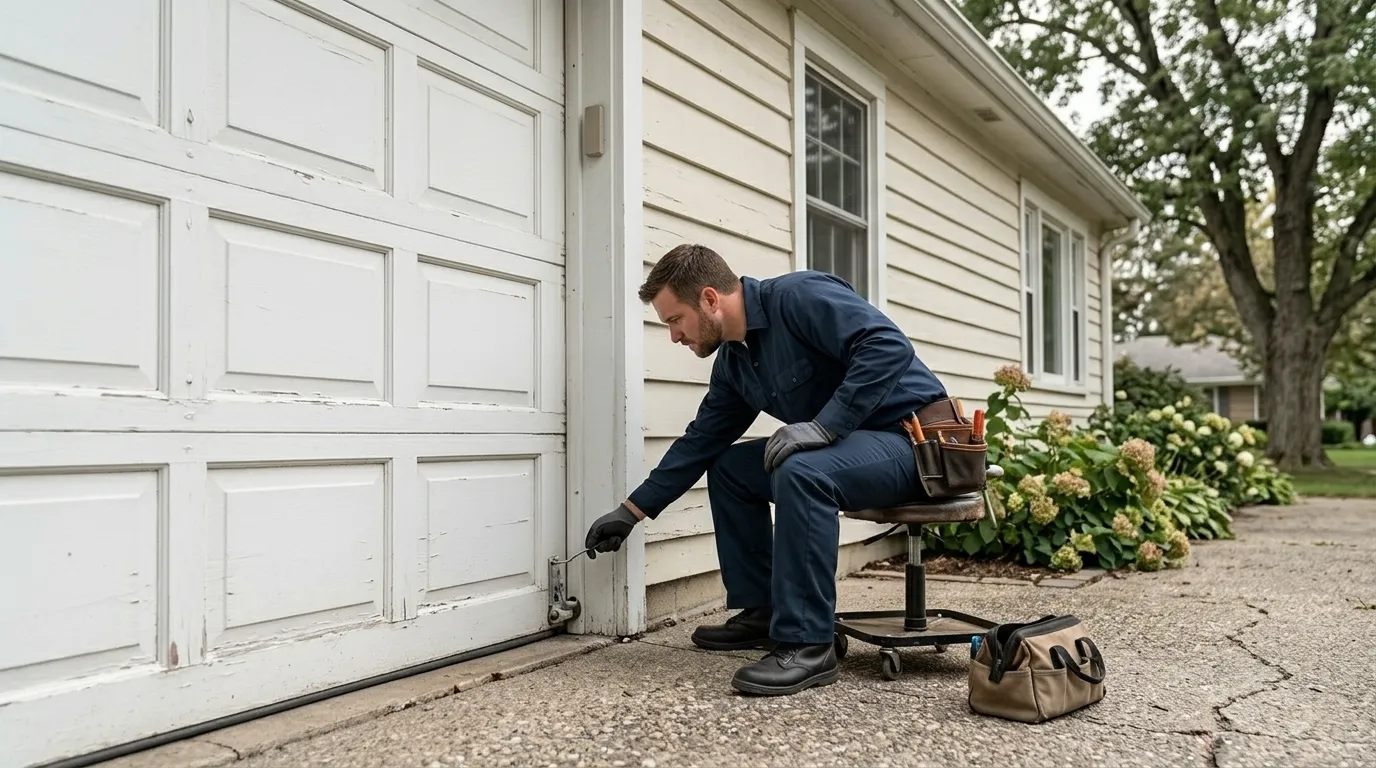
Aloha isn't a small stop for us - it's roughly 18,790 households, most sitting on lots built out in one long stretch through the 1980s and 90s. That kind of scale means we see the same handful of failures over and over, not a random mix. A neighborhood built in a five-year window tends to fail in the same five-year window, decades later, which is why a spring call in one part of Aloha often means three more calls nearby within the season.
We come out from Portland, about 11 miles east, so we're not sitting on a truck around the corner. What we do instead is bring the parts that match what's actually installed here rather than guessing on-site. On a service call we check the spring wind and cycle count first, since builder-grade torsion springs from that era were sized for the door weight of the time, not for a heavier insulated replacement panel someone bolted on later. Then we look at the track alignment and the opener's force settings, because original openers from this build era rarely have working travel limits left. We diagnose on site, quote the repair before we touch anything, and only replace what's actually failed.
Because Aloha's housing runs mostly 1980s and 90s construction, we stock torsion springs sized for the lighter, single-layer steel doors that were standard in that build era - not the heavier insulated doors that get sold today. Rollers and hinges from these installs are usually the stamped-steel type that wears a groove into the track over 30-plus years, so we carry replacement rollers in the sizes that actually fit this hardware, not just whatever's newest.
We also carry replacement drums and cables sized for the shorter headroom common in garages from this period, since a lot of these houses were built with less clearance above the door than current code calls for. What we don't stock on the truck is anything custom - a nonstandard door width or a specialty insulated panel usually means a special order, and we'll tell you that up front instead of promising same-day on something we don't have.
Aloha's median household income runs about $96,754, a bit under the wider service area's $102,931, and that shows up in what kind of repair most people ask for here: fix the spring or opener, don't replace the whole door unless it's actually beyond saving. We don't have a set price to quote you sight unseen - springs, cables, and openers all cost differently depending on size and brand - but we do quote the job before starting any work, not after.
One honest note: if a door is original to a 1980s build and the track, springs, and opener are all failing at once, patching one part at a time can end up costing more than replacing the unit outright. We'll tell you when we see that, rather than running the meter on repairs that won't hold.
The most common mistake we see in Aloha is someone replacing a broken spring themselves and reusing the original cable drums, which on a 30-to-40-year-old door are usually worn enough to slip under the new spring's tension. That's not a small thing - a slipping drum under load is how cables snap and doors come down unevenly.
The other one is opener force settings. A lot of these original openers were installed with lower resistance settings than current standards call for, and once a homeowner adjusts a track or spring without resetting the force, the door either won't reverse properly on an obstruction or it slams down hard at the end of travel. We check both of these on every call in this area because the age of the housing stock makes them near-universal, not occasional.
With a median build year around 1983, most garage doors in Aloha are approaching or past the point where the original torsion spring has hit its rated cycle count - these springs were rated for a set number of open-close cycles, and a door used daily for 35-plus years has usually run through several times that number without anyone knowing to check.
The climate here runs mild with occasional freeze, which isn't hard on doors the way a harsh winter climate is, but it does mean galvanized hardware from this era shows rust at the roller ends and cable anchors before anything else fails, and that rust is often the first sign the rest of the hardware is close behind. We don't see storm-driven damage as the leading call in this area - it's age and cycle count on original equipment, plain and simple.
We're based in Portland, about 11 miles east of Aloha. We don't run a branch or depot out here - we travel out for scheduled service calls, so we won't promise a same-hour response, just an honest appointment window.
On original openers from the 1980s and 90s builds common in Aloha, the force settings are often set lower than today's standards and drift further out of adjustment over decades of use. If your track or spring has been worked on without resetting those settings, the safety reverse can stop functioning correctly.
Depends on what's failing. If it's just the spring or a cable, repair almost always makes sense. If the track, spring, and opener are all going at once on a 30-plus-year-old door, we'll usually tell you replacement costs less over time than patching each part separately.
Call now or request a free quote - same-day service on most repairs, upfront written pricing.