Portland, OR · Garage Door Service
Aloha homes run older than the region average, and incomes here shift the repair-or-replace math. See how we install and price new doors for this stretch west of Portland.
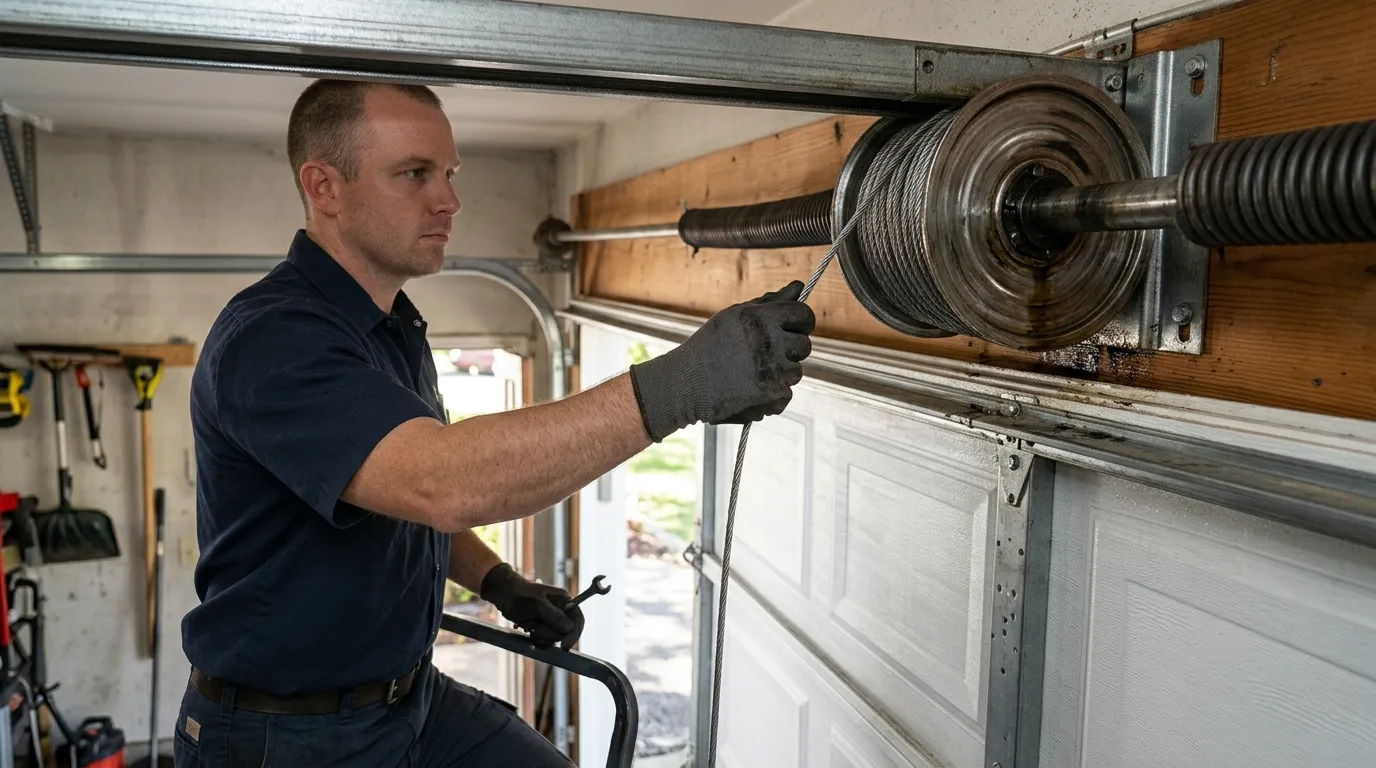
We start every install the same way, no matter what's already hanging in the opening: measure the rough opening, check the header for the right backing, and look at what the track and spring system are doing to the frame. In Aloha, where the median house went up around 1983, that usually means a single-car or two-car opening built to the specs of that era - often narrower than what a newer double door needs, and framed for a torsion spring setup that's now outdated.
We pull the old door, hardware and all, and set new jambs if the opening's shifted or rotted at the base, which happens on houses this age when the original weatherstrip failed years ago and nobody replaced it. Then the new door goes in, tracks get plumbed, springs get set to the door's actual weight, and the opener gets programmed and tested through a full cycle before we call it done.
We don't paint over a bad opening. If the framing's soft or out of square, we say so before the door goes in, not after. A new door hung crooked will fight you every day it's up, and that's a callback we'd rather not make.
For a straight installation we bring the door panels, new track sections, torsion springs sized to the door's actual weight, rollers, cables, and a new bottom seal. Aloha's housing stock - mostly 1960s through mid-2000s construction across this part of the region - still turns up openings built for older hardware standards, so we carry the connector plates and jamb brackets that let a modern door sit correctly in an older frame instead of forcing a mismatch.
Openers are a separate line item from the door itself. We install the belt or chain-drive units that match the household's actual use - a two-car household running two vehicles daily wants a heavier-duty drive than an occasional-use single door.
One limit worth saying up front: we don't stock custom wood doors or oversized commercial track on the truck. Anything outside a standard residential opening gets ordered, and that adds lead time you should plan around before you set a moving date or a contractor deadline tied to the garage.
Median household income in the Aloha-area part of our service territory runs $96,754, a notch below the $102,931 median across the wider area we cover. That gap matters more than it sounds like it should, because it's exactly where the repair-or-replace decision gets close. At incomes in this range, a full new-door installation is a real budget decision, not an impulse buy - which is why we walk through repair cost against replacement cost on the actual door in front of us, not a general rule of thumb.
A door that's only got a bent panel or a failed spring, on hardware that's otherwise sound, almost always repairs cheaper than replacing. A door where the track is rusted through, the panels are dented on both sides, and the opener is original to a house built in the early '80s is a different conversation - repair costs start stacking up against a fresh install fast.
We don't quote a number here that isn't tied to the door we're standing in front of. What we can tell you is which side of that line your specific door falls on once we've looked at it.
The most common surprise on an Aloha job isn't the door - it's the opening underneath it. Houses built around the early-to-mid 1980s, which is most of what's standing in this stretch, were framed to a header size that doesn't always match what a new double-door install expects. We catch that at the measuring stage, not after the door's ordered.
The second place things go sideways is wiring. A house from this era with an opener added later - sometimes decades later - often has a dedicated circuit that wasn't run to code for a heavier modern unit. We're not electricians, and if the panel or the run needs work beyond a simple outlet swap, that's a call to bring in someone licensed for it before we finish the opener side of the job.
The third: assuming replacement is automatic once a door looks bad. Cosmetic dents on a structurally sound door with a healthy spring and track are a cheaper fix than a swap. We'd rather tell you that up front than sell a door you don't need yet.
The region sits in a mild climate with occasional freezes, not the deep-freeze cycling that cracks panels outright, so the wear pattern here is slower and more mechanical than weather-driven. What actually fails on Aloha doors is age catching up with hardware: torsion springs rated for 10,000 cycles that have quietly passed that mark on a house built in the early '80s, rollers that were steel when steel was standard and have been grinding the track ever since, and openers original to houses now over forty years old.
Aloha's part of the broader area we serve - a territory of 243,751 households and 101,547 owner-occupied houses - skews toward this same build era across dozens of neighborhoods, so the failure pattern isn't unique to one street, it's the pattern for houses of this age generally. That's useful to know: if your door's acting up, it's very likely the springs or the opener reaching the end of a normal service life, not a one-off problem with your particular house.
It depends on what's actually failing, not just the door's age. A door with sound panels and a bad spring is worth repairing at almost any age. A door with rusted track, warped panels, and an opener original to an early-1980s house - which describes a lot of homes in this area - usually tips toward replacement once you add up the repair costs.
We carry standard residential track, panels, and connector hardware that fit most openings from this build era. Openings that are non-standard sizes or need custom framing take longer, since that hardware gets ordered rather than kept on the truck.
Often yes, but houses from this era sometimes have an opener circuit added after the original build that wasn't sized for a heavier modern unit. We'll flag it if the wiring looks off, and if it needs real electrical work, that's a licensed electrician's job, not ours.
About 11 miles. We travel out from Portland for installs in this area; there's no separate branch or depot in Aloha itself, just the same crew and truck making the drive.
Call now or request a free quote - same-day service on most repairs, upfront written pricing.