Portland, OR · Garage Door Service
Aloha's houses mostly went up in the early 1980s, which means torsion springs on steel doors are the norm here. We drive out from Portland to fix them.
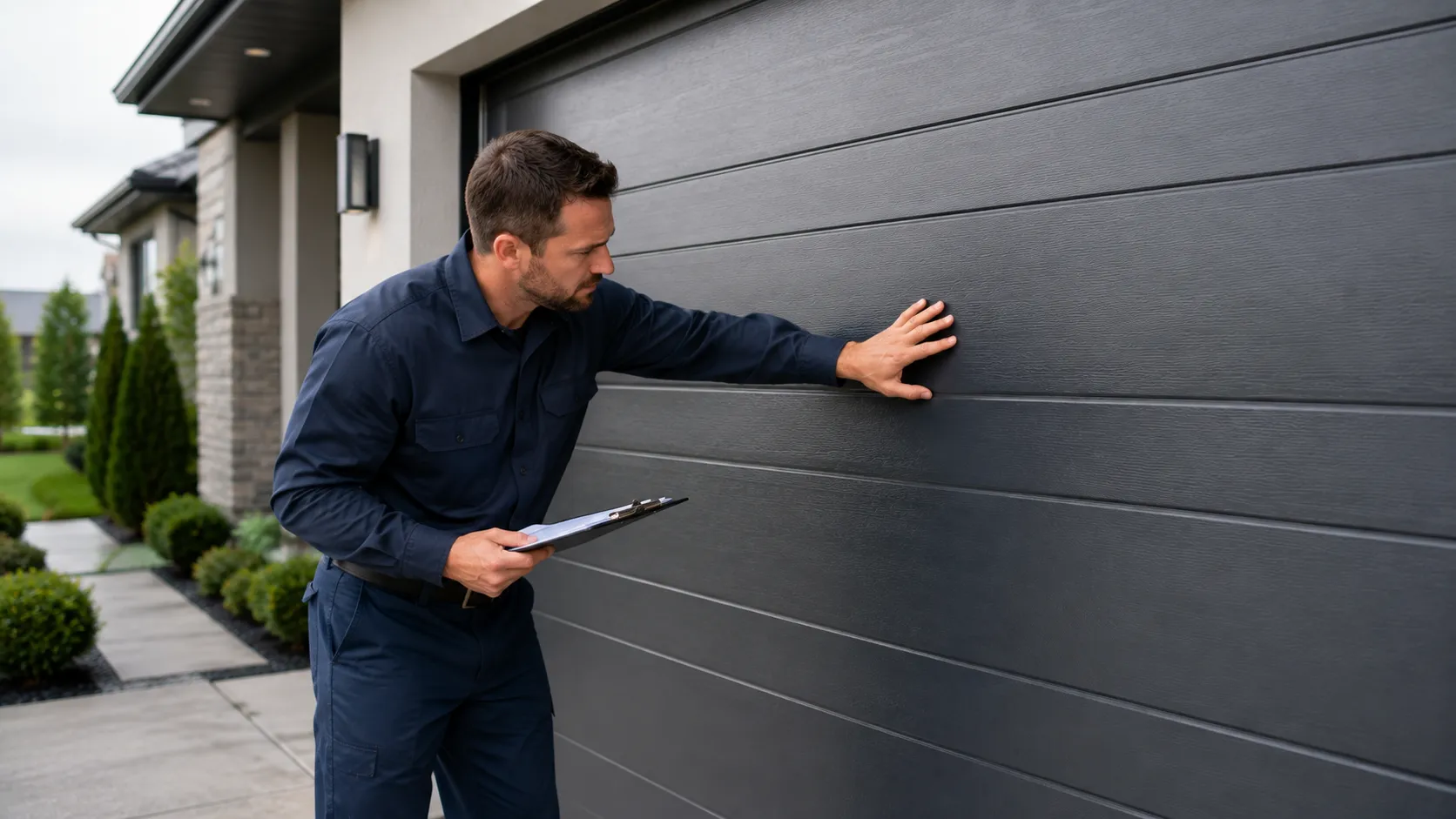
Most of the garage doors we see in Aloha are original or close to it, going up when the median home here was built around 1983. By then, builders had mostly moved off the old extension-spring-and-pulley setup and onto torsion springs mounted on a shaft above the door - a change that happened broadly across houses built from 1964 through 2006 in this part of the metro. That's the system we're set up to work on: we back the tension off with winding bars, pull the broken spring off the center bracket, and match the new one to the door's weight and height rather than guessing at a size off a shelf. On a standard double door with a single torsion spring, that's usually a same-visit fix once we're on site. We come out from Portland, so nothing here is a rush job with a parts run in the middle - we bring what a door built in this era is likely to need, and we've usually got it right the first trip.
For doors from the early-to-mid 1980s stock common in Aloha, we carry torsion springs sized for 7-foot and 8-foot steel doors, standard center brackets and end bearing plates, and the cable and drum sets that pair with them. What we don't stock on the truck is anything for the older extension-spring doors that show up occasionally on the handful of houses that predate that mid-60s cutoff - those need a pulley and safety cable setup we have to source separately, and if that's what's on your door, tell us on the phone so we're not guessing at the driveway. One honest limit: if a spring has been mismatched to the door before - too light, too heavy, wrong wind - we sometimes find that out mid-job, and the fix takes longer than a straight swap would. We'd rather tell you that up front than surprise you with it once the door's already apart.
We're not going to put a number here we don't have - pricing depends on spring size, whether it's a single or double torsion setup, and what else the door needs once we've got the tension off it. What we can tell you is what drives the cost in a neighborhood like this: doors from the early 1980s building wave tend to need a straightforward torsion swap, not a full hardware rebuild, because the track and rollers from that era are usually still serviceable if they've been kept up. That keeps the job closer to a spring-only repair than a bigger fix. If your opener is also straining or the door's binding on the track, that's a separate conversation, and we'll walk you through it on site rather than quote it blind over the phone.
The most common way a spring job turns into something bigger is when someone's tried to force the door open or closed after the spring already broke. On a door this age, the opener isn't built to lift the full dead weight of a steel panel door on its own, and running it that way strips the gears or burns out the motor - now it's a spring job and an opener job. The other way it goes sideways is age hiding in the cable. A torsion spring failure is sudden, but the cable on the other side of the door has usually been stretching and fraying quietly for years on a house this old, and it can go next. We check both sides before we call the job done, because replacing one and leaving the other to fail in six months isn't a fix, it's a delay.
The climate here is mild with occasional freezes, not the deep-freeze cycling that cracks metal outright, but cold snaps still stiffen the lubricant inside a torsion spring's coils and add load right when the spring's oldest and most brittle. On a door installed when this area was mostly built out - the early 1980s - that spring has had three or four decades of daily cycling before it finally goes. It's rarely one bad day that breaks it. It's forty years of opens and closes catching up on a cold morning.
Torsion springs wear from cycling, not from one bad use. On a door from the early 1980s building era common in Aloha, the spring's been through decades of opens and closes. A cold morning adds just enough extra load that a spring already near the end of its life finally lets go, usually with a loud bang and no other warning.
For the torsion-spring setups standard on doors built through the 1980s and 90s in this area, yes, we bring sized springs, brackets, and cable sets with us from Portland. Older extension-spring systems, less common but still around on a few Aloha houses, sometimes need a part we source separately.
Not usually, and we won't push it unless the opener's actually damaged. A door built with standard torsion hardware from this era typically just needs the spring matched and swapped. If someone's run the opener against a broken spring, though, that's a different job - we'll tell you honestly if that's what's happened.
Call now or request a free quote - same-day service on most repairs, upfront written pricing.