Portland, OR · Garage Door Service
Portland Garage Door Pros drives to Tigard for spring, opener, and panel repairs on homes built in the late 1980s, when torsion hardware became standard.
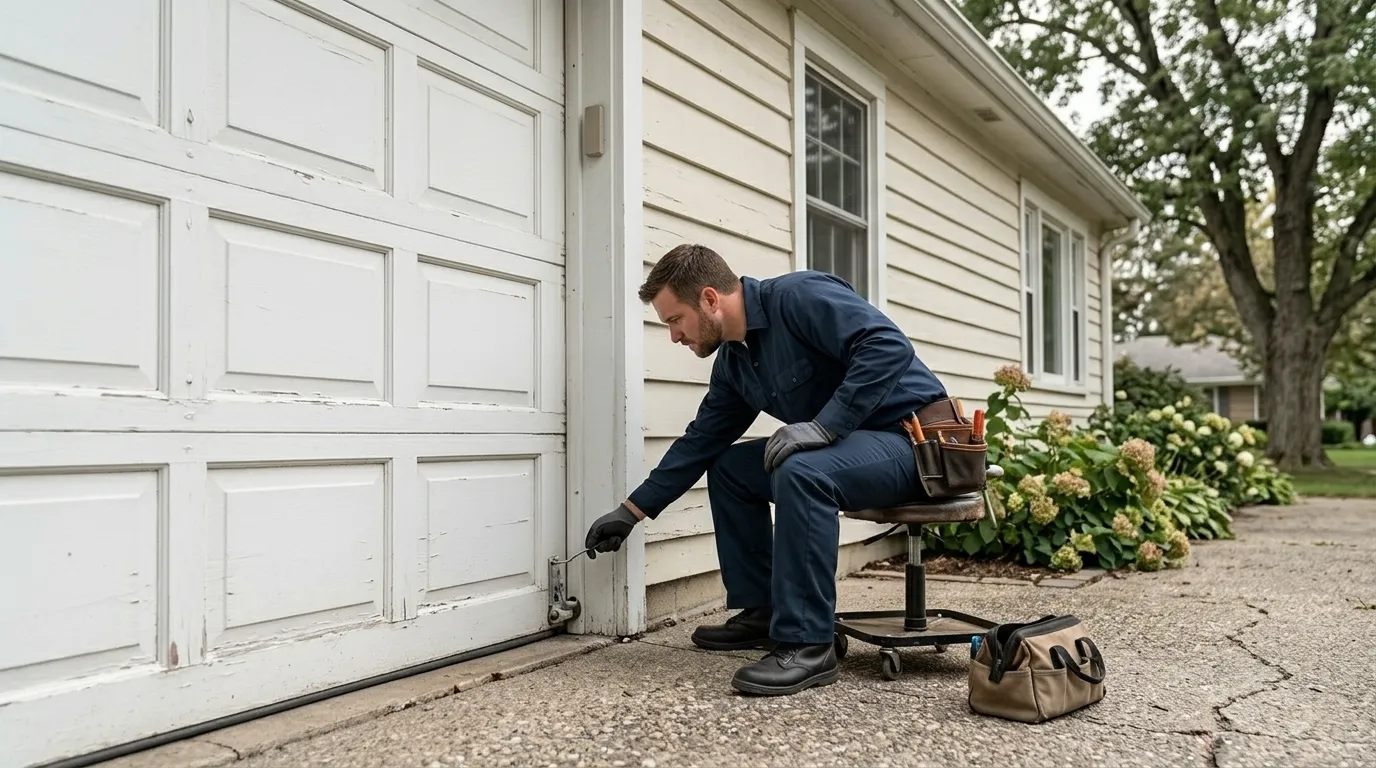
Most houses in Tigard went up around 1988, right in the middle of the wider service area's 1964-2006 building window. By the late 1980s, steel doors on torsion spring hardware were the standard build, not an upgrade someone bolted on later. That matters for what breaks. A door from this era usually has a single torsion spring mounted on a center bracket, wound to a factory tension that was calculated for the original door weight. Thirty-five years on, that spring is well past any reasonable service life, and a lot of the openers from the same build wave are chain-drive units nearing the end of their own run. When a spring on one of these doors lets go, it's not a gentle sag - it's a dead lift with no assist, and the cables and drums that share the load are usually just as tired. The fault we see most in Tigard isn't a mystery part or an odd configuration; it's ordinary late-80s hardware that's simply outlived itself. That's a different failure pattern than you'd get in a neighborhood built in the 1960s with older extension springs, and it's why we ask the build year before we ask anything else.
We're based in Portland and drive out to Tigard, about 10 miles down, to handle the call. There's no branch office or drop-in counter here - it's a truck that comes from Portland, does the job, and heads back. That's worth knowing upfront so nobody's waiting on a storefront that doesn't exist. When you call, tell us the door's approximate age (if your house was built anywhere near 1988, say so) and what it's doing - won't open, opens crooked, makes a bang before it stops moving. That's enough for us to load the right springs and cable before we ever leave the shop, instead of guessing on-site. If you're not sure which service area page matches your address, our service area listing covers the neighborhoods and towns we run, Tigard included, so you can confirm before you call rather than after.
A straight spring swap on a standard torsion setup, the kind common on Tigard's late-1980s doors, is usually a same-visit job once the truck is on-site - it doesn't require a special order for common spring sizes. Where it stretches out is when the opener itself is original to the house. A chain-drive unit from 1988 or so may need a part that isn't sitting on a shelf anymore, and if that's the case, we'll tell you before we start, not after we've already got the door apart. Panel damage is its own timeline - a dented or bent section on an older steel door sometimes means ordering a matching panel, and matching a 35-year-old color and rib pattern isn't always possible. We'd rather say that plainly than promise a fix we can't deliver on the first visit.
On a Tigard door from the late 1980s, the tell-tale signs cluster around the spring and the drum, not the track. A door that won't budge, or one that a person can barely lift by hand, points to a broken or badly weakened torsion spring - the door's own weight, unassisted, is heavier than it looks. A loud bang followed by the door sitting dead in the opening is almost always the spring itself letting go, not the opener failing. If the door runs but one side drops faster than the other, that's usually a worn cable or an uneven drum, both common once the original hardware passes the 30-year mark. Openers from this build era sometimes reverse for no clear reason or stop responding to the wall button; that's often a worn gear inside the unit rather than anything wrong with the door. None of these are exotic - they're what you'd expect from hardware installed when Tigard's housing was still going up.
There are things on this door worth doing yourself and things that aren't. Lubricating rollers and hinges, tightening loose hardware on the track, clearing debris from the sensor eyes - fine, do it yourself, it's basic upkeep. A torsion spring is not on that list. It's wound under enough tension to cause a serious injury if it lets go while you're working on it, and that's true whether the door is five years old or thirty-five. We won't talk anyone through a spring swap over the phone, and we'd rather lose that job than have someone get hurt trying to save the service call. If your door is stuck down and the spring looks broken, the safest move is to leave the opener disconnected and the door where it is until someone can look at it in person.
Because it tells us what's likely inside the door before we ever see it. Most Tigard homes went up around 1988, which means torsion springs and steel doors were the standard build, not a later add-on. Knowing that lets us bring the right spring size and cable on the first trip instead of making a second run for a part we didn't expect to need.
No. We're based in Portland, about 10 miles away, and drive out to handle calls in Tigard. There's no local storefront or drop-in location here - just a truck coming from Portland to do the job and head back.
Sometimes. A chain-drive opener from the late 1980s can often be fixed if the failure is a common part like a gear or capacitor, but original units this old sometimes need a piece that's no longer readily stocked. We'll check before we start work and tell you plainly if replacement makes more sense than repair.
We don't recommend it and we won't walk you through it by phone. A torsion spring is wound under enough force to cause serious injury if it releases while you're handling it. Leave the door and opener alone until someone can look at it in person - that's true no matter how old the door is.
Call now or request a free quote - same-day service on most repairs, upfront written pricing.