The biggest mistake we see is someone measuring their own opening, ordering a door online, and finding out the jambs are out of square by half an inch - common in houses built in the 1970s and 80s, which covers most of the stock from Buckman out to Cully and Rose City Park. A door that's a good size on paper can still bind on the track if the framing has settled over forty or fifty years.
The second mistake is picking a door based on the showroom photo instead of the R-value. A lot of homes in this service area, especially the 1964-2006 construction that makes up most of what's here, have garages that share a wall with a bedroom or laundry room. An uninsulated steel door in that spot means the room next to it never really warms up.
Third, people assume any installer can pull the old door and hang the new one in an afternoon. That's usually true, but if the opening was framed for a door style no longer made - some builders in the 80s used nonstandard track clearances - you may need custom jamb work first. Ask before you buy, not after the door shows up on the truck.
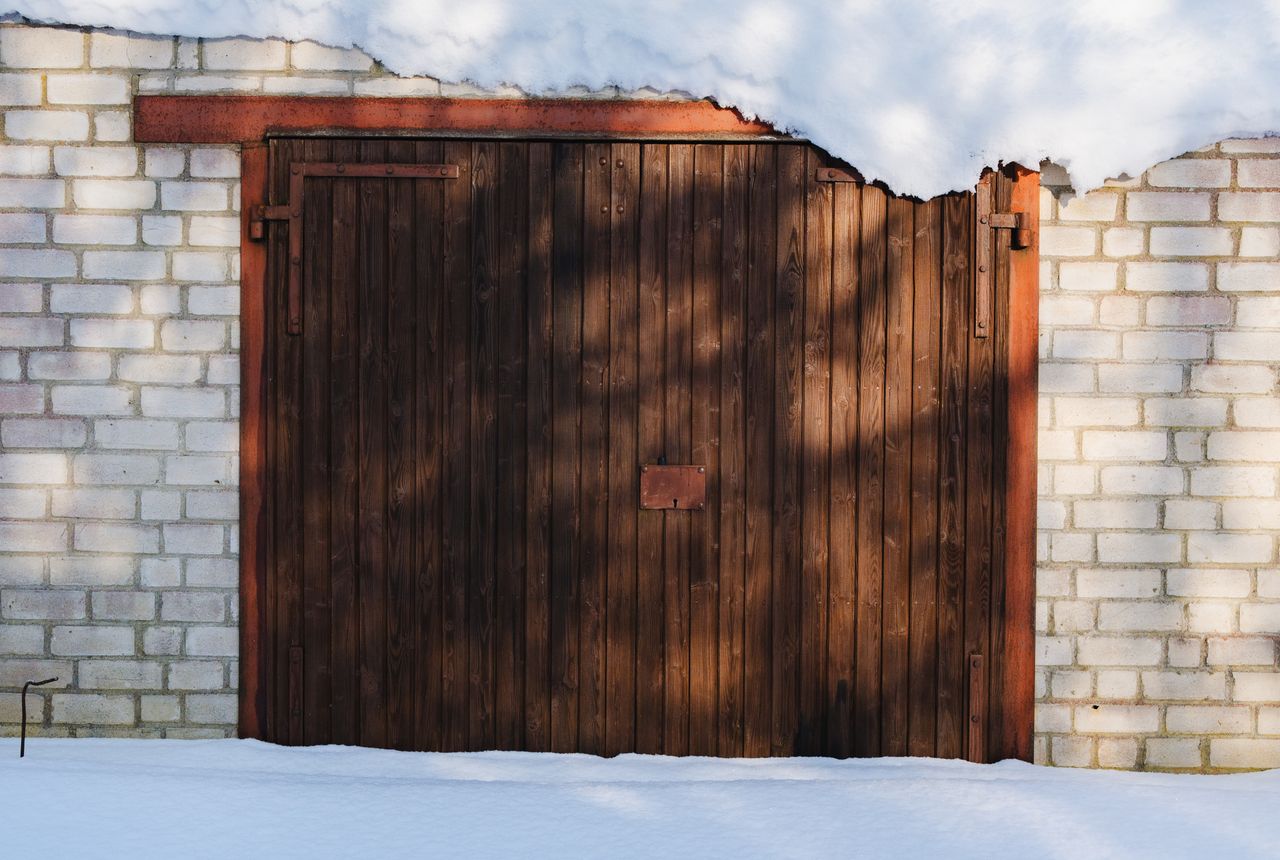
Portland's climate is mild with occasional freeze, not the deep-freeze conditions that push people toward extreme cold-rated hardware. But mild-with-freeze cuts a specific way here: it's the freeze-thaw cycling, not the cold itself, that wears out weatherstripping and bottom seals faster than a drier climate would. A door that's fine in August can start letting water track under the bottom panel by January.
If you're replacing a door, that argues for a solid vinyl or rubber astragal seal and a track alignment that's actually correct, not just close. Loose alignment plus repeated wet-dry swelling of wood jambs (common in the older end of our 1964-2006 housing range) is what causes the slow gap you don't notice until the garage floor is damp every winter.
We don't sell you on insulation ratings you don't need. If your garage is detached and unheated, a basic steel door is often the right call and spending more on foam-core doesn't buy you much here. Save the upgrade budget for a door that seals well at the bottom - that's the part doing the real work against our weather.
Not every door on the edge needs to go this year. If the panels are sound and the only issue is a dent, worn rollers, or a spring near the end of its cycle count, repair is usually the cheaper and faster path, and it's honest work - we'd rather fix what's fixable than sell a door that isn't dead yet.
Where we tell people to hold off on buying: if the house is on the newer end of the local range, built closer to 2006 than 1964, the original door hardware is often still within spec and a full replacement is overkill for cosmetic wear alone.
Where we tell people not to wait: if the door is original to a house from the early part of that 1964-2006 window and you're already seeing rust at the bottom panel seams or the opener straining on every cycle, further delay usually costs more in emergency spring or cable calls than it saves. One limitation worth saying plainly - we don't stock every discontinued panel style, so if your door is an odd size from that era, expect a lead time on parts rather than a same-day fix.
This service area runs from denser inner neighborhoods like the Pearl District and Buckman a mile or two out, to Cedar Mill, Bethany, and Aloha eight to eleven miles out, with plenty in between - Milwaukie, Tigard, Gladstone, Gresham. The housing underneath that spread is mostly 1980s-90s construction, with a median build year around 1982, which means original garage doors in a lot of these houses are well past a reasonable service life even if they still open and close.
Median household income across the area runs a little over $102,900, and with roughly 101,500 owner-occupied houses out of about 243,750 households total, replacement demand here isn't rare - it's just spread across a lot of different eras of construction, which is why a one-size answer on door choice doesn't hold up. What's right for a 1960s house near Brooklyn or Hosford-Abernethy isn't necessarily right for a 1990s build out toward Bull Mountain or Sherwood.
If you want a straight answer on whether your specific door is a repair or a replacement, that's a conversation, not a guess from a spec sheet. Start at /.
If your house falls in the 1964-2006 range typical of this area and you've never had panel or track work done, there's a decent chance it's original. Look for a manufacturer plate near the bottom bracket - if it's faded past reading or missing, that itself is a sign of age worth factoring into a repair-versus-replace call.
Not really. Our climate is mild with occasional freeze, so the wear we see is mostly from seasonal wet-dry cycling on seals and jambs, not extreme temperature stress on the door itself. Spend on a good bottom seal and correct track alignment before you spend on a heavier gauge steel door.
It depends on whether the garage shares a wall with living space. In detached, unheated garages common across the area, insulated doors often don't pay back much given our mild winters. If the garage backs onto a bedroom or laundry room, insulation is worth the extra cost.
Call now or request a free quote - same-day service on most repairs, upfront written pricing.