Argay Terrace sits about 6 miles east of downtown Portland, on the east side of the city where the street grid loosens up into the curving subdivisions built after the war. We don't have a landmark list for this neighborhood and won't pretend to one, but the location itself tells you something useful: this is far enough out that a lot of the original garage hardware from the build-out era is still in place, because it's outlasted a couple owners who never had a reason to touch it. We work this side of Portland regularly, and a call from Argay Terrace is a normal Tuesday for us, not a special trip.
The area sits in a mild climate band with occasional freezes, which matters more for garage doors than people expect. It's not the swings that wreck hardware out here, it's the slow creep of moisture into springs and track bolts over a winter that never quite dries out between storms. A door that's been fine for fifteen years can seize up in a single cold snap once corrosion has already done its work quietly in the background.
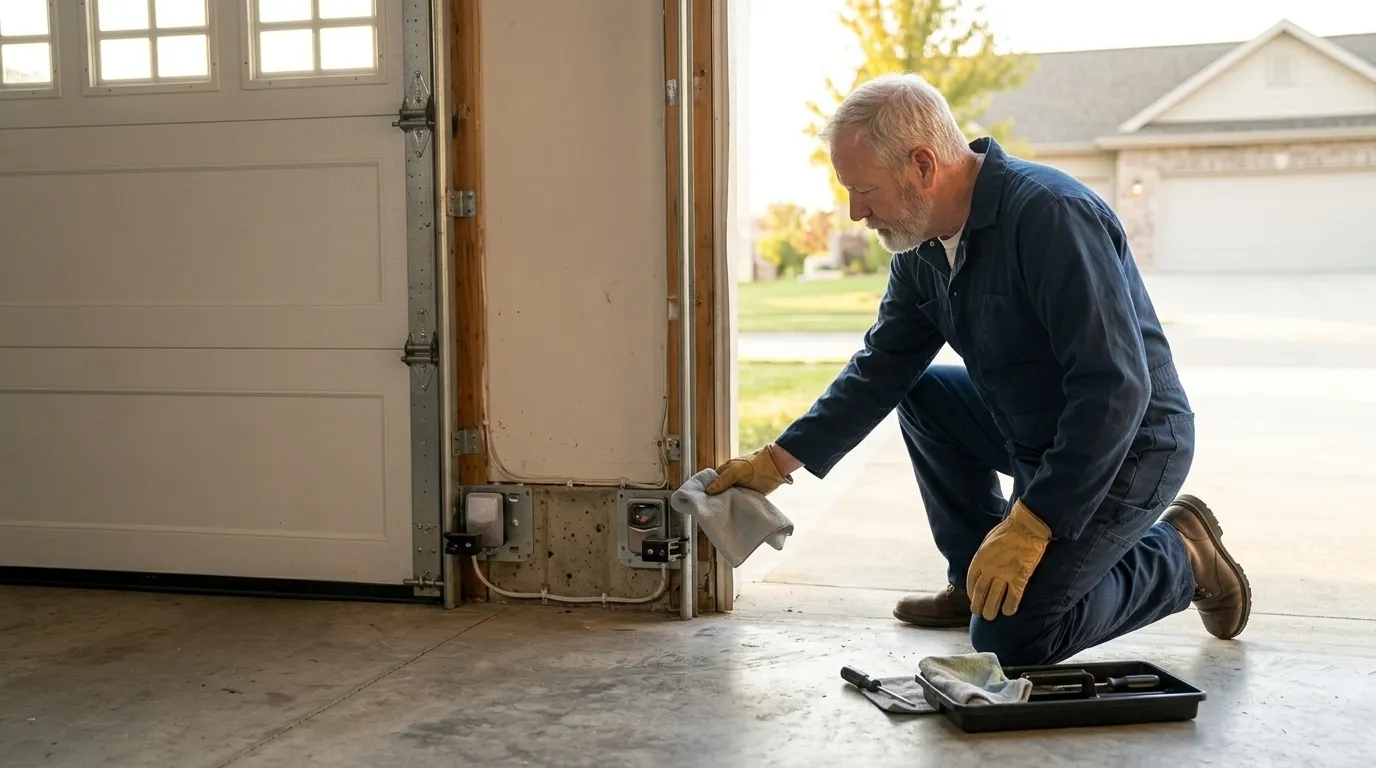
We don't have a same-day guarantee or a fixed price to quote you here, and I'd rather tell you that up front than promise something we can't back up. What we can tell you is that a call to schedule a look at your door is a short conversation: what the door is doing (or not doing), roughly how old the opener is if you know, and whether it's a single or double door. That's usually enough to know what to bring on the truck.
If you're not sure whether the problem is worth a service call, describe the symptom rather than guessing at the cause. "It slams the last foot instead of closing slow" tells us more than "the door's acting weird." We'd rather ask a few questions before showing up than get to Argay Terrace and find out we needed a part that was sitting on the shelf back at the shop.
Across this service area, most housing stock dates from 1964 to 2006, with a median build year around 1982, and the bulk of it went up in the 1980s and 90s. Argay Terrace's homes fit that pattern - not the oldest housing in Portland, but old enough that a good share of garages still have their original steel doors and first-generation chain-drive openers, especially if the house has only changed hands once or twice.
That era of construction means a few predictable things: torsion springs sized for lighter doors than what people sometimes swap in later, single-wire safety sensors that don't meet current standards, and openers with no battery backup. None of that is a crisis by itself. It's just worth knowing what decade your garage is actually built for before you decide whether to repair or replace a part. A repair on an 80s-era door is often the cheaper and more sensible move; replacement only makes sense when the track or frame itself has shifted, which happens sometimes on original slab foundations from that build period but not on every job.
With median household income in this service area at $102,931 and a mix of long-time owners and newer buyers across the roughly 101,547 owner-occupied houses we serve, Argay Terrace calls tend to split fairly evenly between people replacing worn-out original equipment and people who just bought a house and want to know what they've got. Both are fine reasons to call.
We don't stock every part for every opener model from the 80s and 90s - some of the older chain-drive units use parts that are genuinely hard to find now, and if yours is one of them, we'll tell you straight rather than stall on ordering something that may not show up. In that case, opener replacement is usually faster and not much more than tracking down a discontinued part. Get in touch through our contact page and we'll figure out which situation you're in before we drive out.
No, and we're not going to guess. We know the neighborhood by its location, about 6 miles east of downtown Portland, and by the housing era typical of this side of the city. If you need directions or a description of your street, that part's on you when you book.
Often yes, if the motor and gears are sound and the failure is a switch, sensor, or belt/chain issue. Where it gets harder is discontinued circuit boards on older chain-drive units - those sometimes push you toward replacement simply because the part isn't made anymore, not because the door itself is bad.
The mild-with-occasional-freeze climate this area sits in is gentler on doors than a true cold-winter climate, but it's not nothing. Moisture sitting in springs and track hardware over a damp winter causes slow corrosion, which tends to show up as sudden stiffness or noise once a cold snap hits, even though the real damage happened months earlier.
Call now or request a free quote - same-day service on most repairs, upfront written pricing.