The mistake we see most is treating a garage door like a generic appliance instead of a piece of hardware tied to when the house was built. Across this service area, housing went up mostly between 1964 and 2006, with the median landing around 1982. That means a lot of doors are still running on the torsion springs, rollers, and track brackets that shipped with the house - not because anyone maintained them well, but because nobody's looked at them.
That 1980s-to-90s wave shows up consistently across the thirty-some named areas we work in, from close-in spots like Lloyd District and Buckman a mile or two out to farther stretches like Scappoose and Canby, nineteen miles from the core. A door that's original to a 1982 build has had four decades of cycles on the same spring wire. Homeowners often call about a noisy opener when the real issue is spring fatigue that's been building for years, and they try to fix the symptom - lubricate the track, adjust the chain - instead of the cause.
We don't fault anyone for this. A garage door doesn't announce its age. But guessing at what's wrong on a house this old usually means a second call a few months later for the part that actually failed.
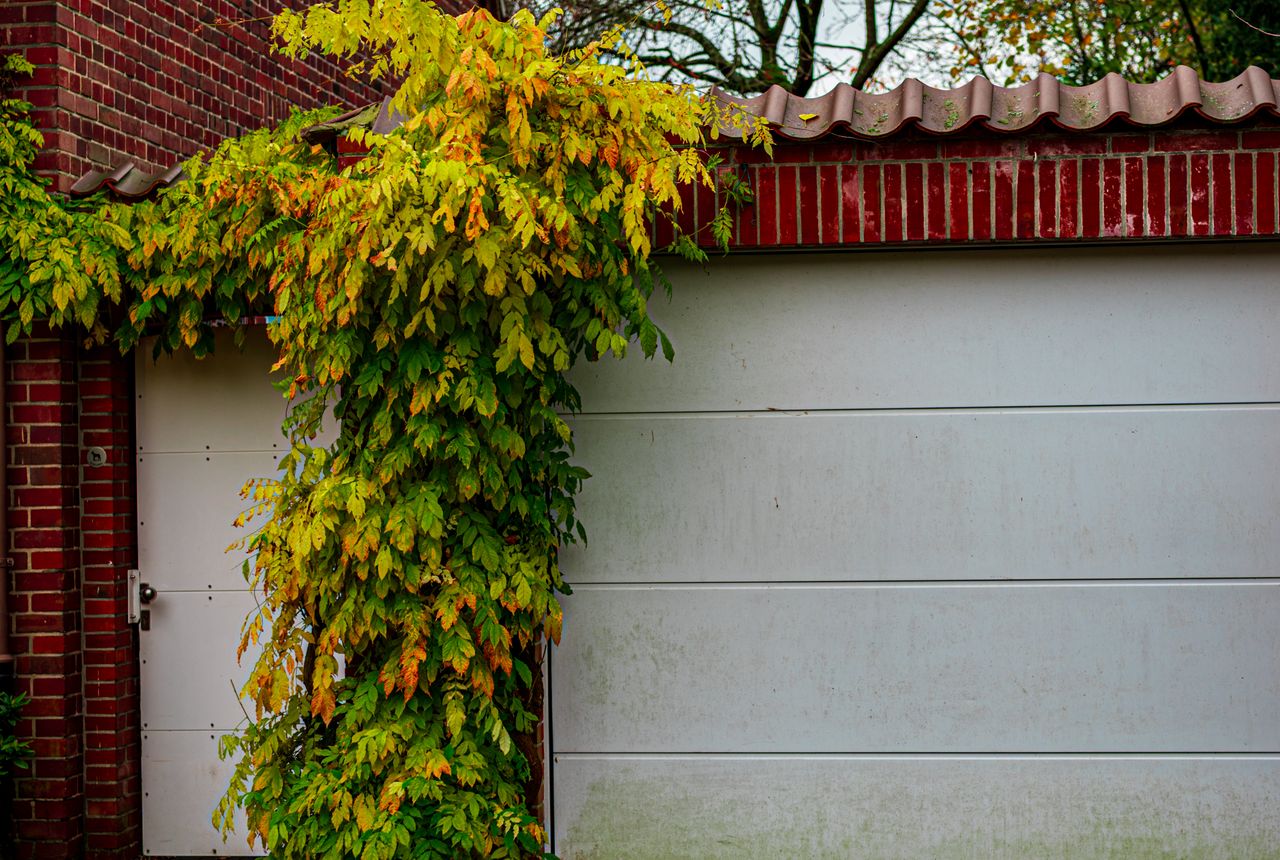
This area sits in a mild climate band with occasional freeze, not the deep-freeze cycles that crack steel or the desert heat that dries out lubricant fast. What it does have is sustained damp - steady rain more than dramatic storms - and that changes what fails first. On houses built in that 1964-2006 window, we see rust on cables and roller shafts well before we see spring failure from cold. The moisture gets into the stranded cable at the bottom bracket and works its way up, and by the time it's visibly frayed it's been compromised for a while.
Weather seals and draughts are the other piece. On a lot of the original doors from this build era, the bottom seal and side weather seals were never replaced, so what looks like an opener struggling to close all the way is often just a warped seal holding the door open a half inch. It's a cheap fix that gets mistaken for something bigger.
We don't get the freeze-thaw cycles that shatter torsion springs outright the way colder regions do, so if your spring is original to 1982, it's more likely worn out from cycle count and moisture than from a hard winter.
Here's the honest limitation: not every door on a 1980s or 90s house is worth repairing piece by piece. If the opener is original to the build and the circuit board fails, we often can't get a matching board - that generation of hardware isn't stocked the way current models are, and a rewound universal replacement doesn't always play well with an old rail system. At that point, patching it costs nearly as much as replacing the opener outright, and you're back at it again in a year.
Springs are different. A worn torsion spring on a door that's otherwise solid - good panels, good track - is almost always worth fixing on its own, regardless of the house's age. The panels and track on houses from this era were generally built heavier than a lot of what's installed new today, so there's often no reason to replace a door that's structurally sound just because the springs gave out.
If you're not sure which side of that line your door is on, that's a fair thing to ask about on the call. We'd rather tell you a repair isn't worth it than sell you one that won't hold.
This service area covers 243,751 households, with 101,547 of those owner-occupied houses - the kind of housing stock where a garage door isn't an afterthought, it's a working part of the home. Median household income across the area sits at $102,931, which is part of why we get more calls for full opener replacement with battery backup than bare minimum patch jobs; people would rather solve it once.
We cover close-in neighborhoods like Buckman, Pearl District, and Concordia a couple miles out, mid-range areas like Raleigh Hills, Cedar Mill, and Tigard six to ten miles from the core, and farther-out spots like Sherwood, Canby, and Scappoose in the fifteen-to-twenty-mile range. The mix matters because a Lloyd District rowhouse built in the 90s and a Boring property from the same era don't have the same door, even if the age lines up - lot size and how the garage sits relative to weather exposure changes what wears first.
What ties it together is the build era. Whether you're a mile out or nineteen, if your house went up between 1964 and 2006, there's a good chance we already know what's likely to be wrong before we get there.
Depends on what failed. If it's the drive belt, chain, or a sensor, that's usually a straightforward repair. If the circuit board is dead, original boards from that era are hard to source, and a universal replacement often doesn't mate cleanly with an old rail. At that point, replacing the whole opener is usually the better call.
On a lot of houses from the 1964-2006 build era, the weather seals and draughts around the bottom and sides were never replaced. They warp and shrink over the years, and it reads like a door that isn't closing right when it's actually just a worn seal. It's a small, cheap fix.
Not really. This area's climate is mild with only occasional freeze, so we don't see the hard freeze-thaw cycles that snap springs outright. What we see more is moisture and rust working on cables and roller shafts, plus ordinary wear from decades of cycles on original springs.
If the panels and track are sound, a spring or cable repair is usually worth it even on an older door - a lot of this housing stock has heavier original doors than what's sold today. Replacement makes more sense when the opener electronics are original and unsupported.
Call now or request a free quote - same-day service on most repairs, upfront written pricing.