Beavercreek sits 19 miles from our Portland base, which is farther out than nearly every other stop on our route. We don't keep a truck parked nearby, so when we come out here we come prepared for the job that's actually waiting, not a generic call. The work we see in Beavercreek skews toward torsion spring failure and worn extension spring hardware on doors that have been opening and closing since the late 1970s. That's a full spring replacement more often than a quick adjustment. We also see opener units that have outlived two or three logic boards and are on borrowed time, plus track and roller wear that's a symptom of decades of use rather than one bad storm. None of this is an emergency-call pattern. It's a maintenance-deferred pattern, which is a different kind of job and a different kind of estimate.
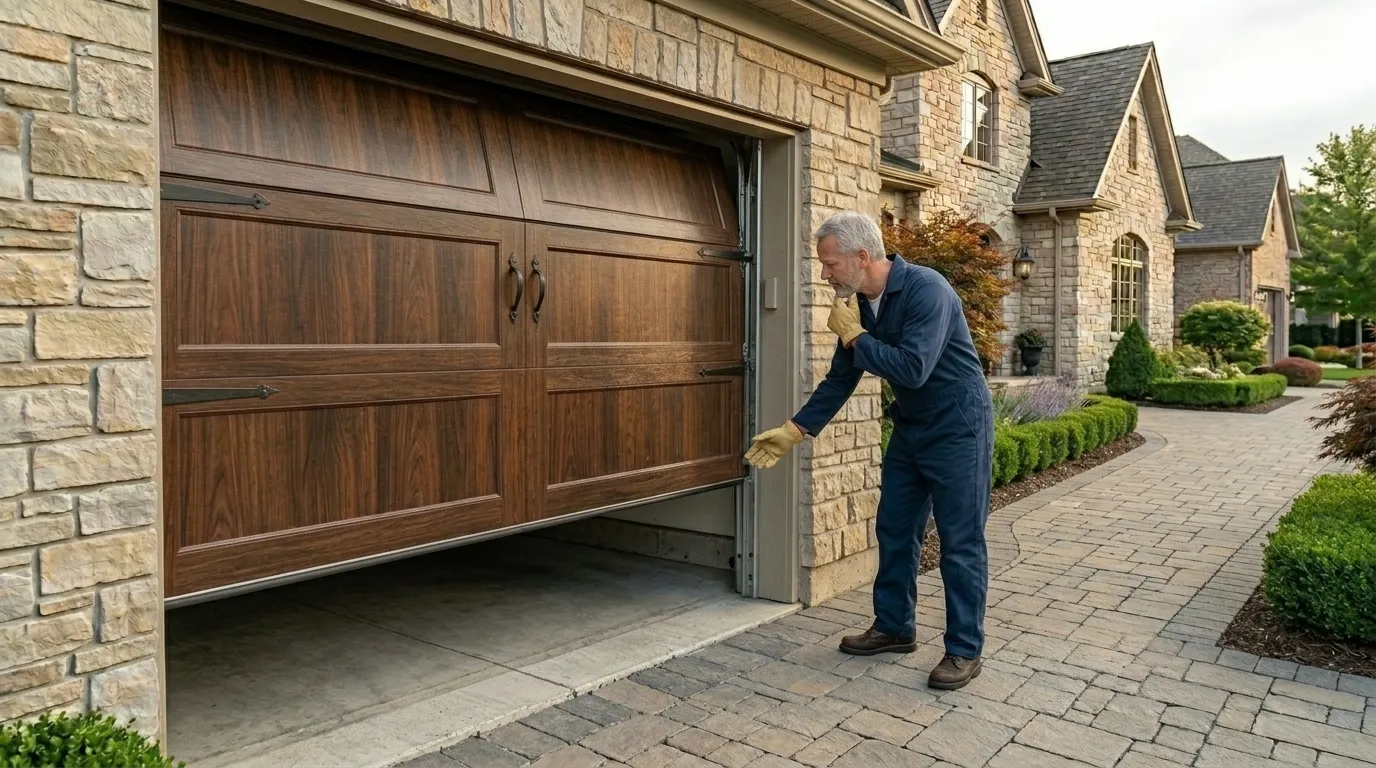
A door installed around 1979 was built for hardware that doesn't match what's on the shelf today. Torsion springs from that era were often sized for heavier, thicker panel doors, and once they go, the whole balance of the door shifts - not just the spring side. Cables and drums show the same age pattern: fraying and stretch rather than a clean snap. We size new springs to the door in front of us, not to a generic wind chart, and we tell you up front if the opener bracket or the track needs replacing at the same time rather than patching around it. One honest limit: if a door's track is bent from age and impact rather than just misaligned, straightening it usually costs more in labor than a new track section, and we'll say so instead of billing hours to save a part that isn't worth saving.
Beavercreek's housing runs a bit older on average than the broader service area - a median build year of 1979 here against 1982 across the wider Portland-area footprint we cover. That's a small gap on paper but it matters for doors, because it puts more of Beavercreek's stock on the far side of a hardware generation that stopped being made. With roughly 1,630 households in the area, this isn't a single subdivision built in one contractor's push - it's a spread of lots and build dates that landed clustered around the late 1970s. The climate here runs mild with the occasional freeze, which is gentler on hardware than a hard winter climate, but it doesn't stop galvanized cable and steel torsion springs from fatiguing on their own schedule regardless of the weather.
Not every door in Beavercreek is original. Where replacement doors have gone in over the years, we're usually working on modern torsion hardware with steel tracks rated for today's heavier insulated panels - straightforward parts, straightforward fixes. The split shows up house to house rather than street to street, which is why we look at the door itself before quoting anything over the phone. A median household income of $130,588 here also tends to shift what people choose once we're standing in the driveway: more owners opt for a full spring and cable swap done right the first time instead of a stopgap fix. We don't push replacement doors on hardware that still has life in it, but on a door original to a 1979 build, patching a spring while the drums and cables are at the same age often just moves the next call a few months down the road.
No. We're based in Portland and drive out to Beavercreek for scheduled jobs, about 19 miles each way. We don't advertise a local depot or a guaranteed response window here because we're traveling in for every visit.
If your house dates to the late 1970s, the exact spring gauge from that era usually isn't stocked new. We measure your door's wire size, wind, and length and order a matching replacement rather than trying to source the original part.
Older torsion setups sized for heavier original panel doors sometimes need a spring, drum, and cable swap together once one part fails, since the rest is usually the same age. Newer doors with modern hardware can often get away with replacing just the failed part.
Call now or request a free quote - same-day service on most repairs, upfront written pricing.