Bull Mountain sits about 12 miles out from our shop in Portland, and the calls we get from up here skew different from the older parts of the metro. Most of what we're doing is opener repair and replacement, broken extension or torsion springs on doors that are still well within their expected life, and the occasional track knock-out of alignment from a bumped panel. We're not pulling out original 1950s hardware here the way we do closer into the city core - the housing is younger, so the failures tend to be wear-and-tear on parts that were installed correctly to begin with rather than parts that were never right for the load. Sensor and circuit board issues on openers show up more than structural door problems. That's a fair trade: newer doors, but the electronics age out just the same as anywhere else, and a board from the late 90s or early 2000s is now old enough that replacement parts can take a call or two to track down.
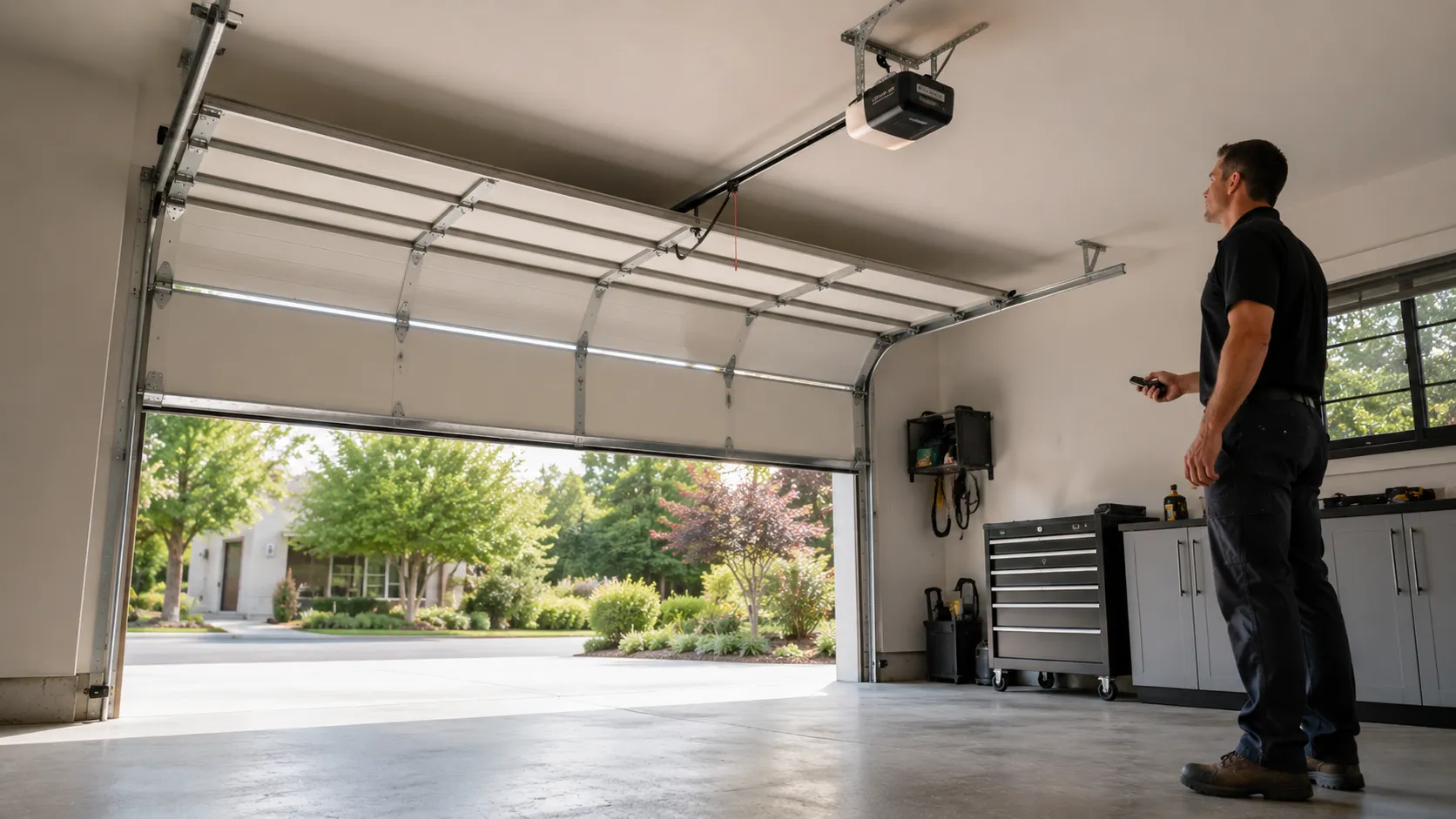
With a median build year of 1995, most garages on Bull Mountain were framed for double-track, factory-balanced doors with torsion springs mounted on a center shaft above the opening - the setup that became standard once older side-mount hardware fell out of use. That's good news for repair costs: parts fit modern spring charts, and we're not guessing at obsolete drum sizes. The mild climate with occasional freeze (per regional weather data) means these doors aren't fighting major swings, so hardware fatigue is slower here than in places with real winters. The failures we see are mechanical age catching up with openers and springs that have simply cycled enough times, not doors that were undersized or mismatched for the house. One limitation worth saying plainly: we don't stock every opener logic board on the truck, and if your unit is an older model, getting the exact replacement board can take longer than the visit itself.
Bull Mountain's housing stock centers on a median build year of 1995, noticeably later than the Portland area's overall median of 1982. That gap matters more than it sounds like it should. Doors and openers installed after the mid-90s generally meet later safety standards, including auto-reverse sensors as a baseline rather than a retrofit. Around 3,219 households sit in this area, and the median household income here runs to $160,755 - well above the $102,931 median across our wider service area. That income level shows up in the work itself: more owners here are replacing doors before a full failure, upgrading to insulated steel or wood-composite panels, and adding smart openers rather than waiting for the old one to quit outright.
Not every house on Bull Mountain was built in the same decade, so we still run into a mix. A pocket of older homes near the edges of the area can carry hardware closer to what we see lower on the hill toward Garden Home-Whitford or Metzger, both a short drive from here - older torsion setups that need a spring rated to a different chart than what ships standard now. But the bulk of the work is on doors from the 90s through the 2000s, which is a narrower, more predictable range than the city as a whole. That predictability is what lets us carry the right spring sizes and opener parts on the truck for most calls out here without a special order first.
No - we're based in Portland and drive out to Bull Mountain, about 12 miles from the shop. We don't keep a local depot here, so we schedule the trip as part of the route rather than promising a walk-in location.
Generally yes. The median build year here is 1995, compared with 1982 across the wider service area, so torsion hardware, auto-reverse sensors and standard spring sizing are more common and older side-mount setups are less common.
Age catches up with electronics regardless of build year. Circuit boards, sensors and drive gears wear out on their own schedule. A house built in 1995 can still have an opener old enough that its board is discontinued and takes longer to source.
It helps. The region sits in a mild climate band with occasional freeze rather than sustained hard winters, so hardware fatigues more slowly than in areas with big temperature swings. It doesn't eliminate wear, it just slows the clock somewhat.
Call now or request a free quote - same-day service on most repairs, upfront written pricing.