Cedar Hills sits about 8 miles from Portland, and the calls we get from this neighborhood skew toward older gear. The typical house here went up around 1965, more than fifteen years ahead of the median build year across the wider service area, which runs 1964 to 2006. That gap matters. A door and opener installed in the mid-1960s has usually been through at least one replacement cycle already, sometimes two, and what's on the wall now is a mix of original steel and whatever got swapped in during a remodel. We see a fair number of jobs where the opener is newer than the door itself, or the reverse - a rebuilt door hung back on hardware nobody's touched since Nixon was president. That mismatch is the single biggest driver of service calls in this part of the map.
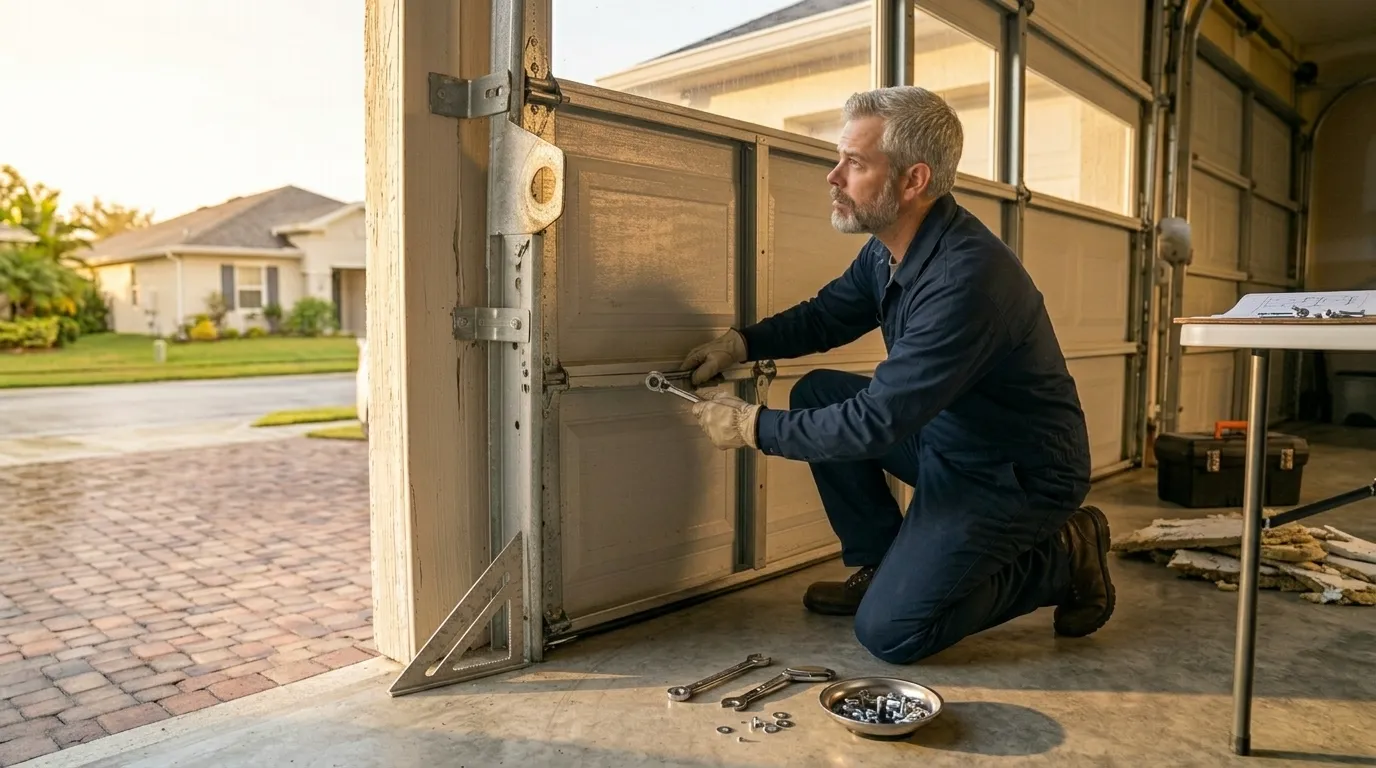
Older housing stock means older spring setups. A lot of Cedar Hills garages still run torsion springs sized for doors that have since been replaced with heavier insulated panels, which throws off the balance and wears the opener gears faster than it should. We also see galvanized track that's pitted at the rollers from decades of use, and jamb brackets that were never upgraded when the door was. None of this is exotic work, but it's not the same job as servicing a door built to a 2005 spec. The climate here is mild with occasional freeze events, so metal fatigue and hardened grease in old bearings show up more than storm damage does. If your door feels heavy to lift by hand or the opener strains and stalls partway up, that's usually a spring sized wrong for the door it's carrying now, not a motor problem.
With a median build year of 1965, most of Cedar Hills predates the wider service area's 1964-2006 range by a wide margin - the area's own stock sits at the early end of that window rather than the middle. That earlier build date usually means narrower garage openings, single-car bays more often than the double-wide layouts common in later subdivisions, and hardware gauges that were standard decades before the current codes. Roughly 3,548 households call this area home, with a median income around $106,919, higher than the $102,931 median across the broader service area. That income level tends to show up in the work we get called for: more full opener and door replacements rather than patch repairs, especially once a homeowner learns what parts for a 1965 track system actually cost to source versus replace outright.
Not every house in Cedar Hills is original 1965 stock - plenty have been remodeled, and some garages have been rebuilt entirely with modern doors and openers. But the split here leans older than the service area as a whole, where the median build year runs to 1982. That fifteen-plus year gap is the reason a Cedar Hills service call often starts with us figuring out which era the door actually belongs to before we quote anything. We'll be honest: if the track, spring, and opener are all original 1965 hardware, patching one component rarely makes sense - the labor to keep hunting parts for the rest usually costs more over a year than a full replacement would. We'll tell you that straight rather than string together repairs on a door that's earned its retirement.
In Cedar Hills it's common for a door to have been replaced with a heavier insulated model while the original 1965-era opener and spring stayed put. The opener wasn't sized for the new weight, so it strains, stalls, or reverses partway up. Rebalancing the spring usually fixes it; sometimes the opener needs upgrading too.
No - we're based in Portland and travel out to Cedar Hills for service calls. We don't keep a depot in the neighborhood, but the drive is short enough that it doesn't change what we can fix or how a job gets scheduled.
Depends on what's failing. A worn roller or a snapped cable on an otherwise sound 1965 door is worth fixing. If the track, spring, and opener are all original and one thing just broke first, we'll usually tell you replacement pencils out cheaper over time than chasing parts piece by piece.
Call now or request a free quote - same-day service on most repairs, upfront written pricing.