Cedar Mill sits about 7 miles from Portland, and the calls we get from this side of the service area skew toward openers and springs rather than the panel rot and hardware you find in older neighborhoods closer in. With a median build year around 1992, most garages here were framed with steel sectional doors and chain-drive or early screw-drive openers rather than the wood or one-piece doors common in the 1960s and 70s stock that makes up a lot of the wider Portland area. That means the failures we see are the ones you'd expect from a 30-year-old system: original openers finally giving out, torsion springs at the end of their cycle count, and nylon rollers that have gone stiff and loud. We don't see much call for the kind of structural jamb repair that comes with a door built before code caught up to modern hardware standards. It's a more predictable set of jobs, and that keeps most visits to a single-part fix rather than a full teardown.
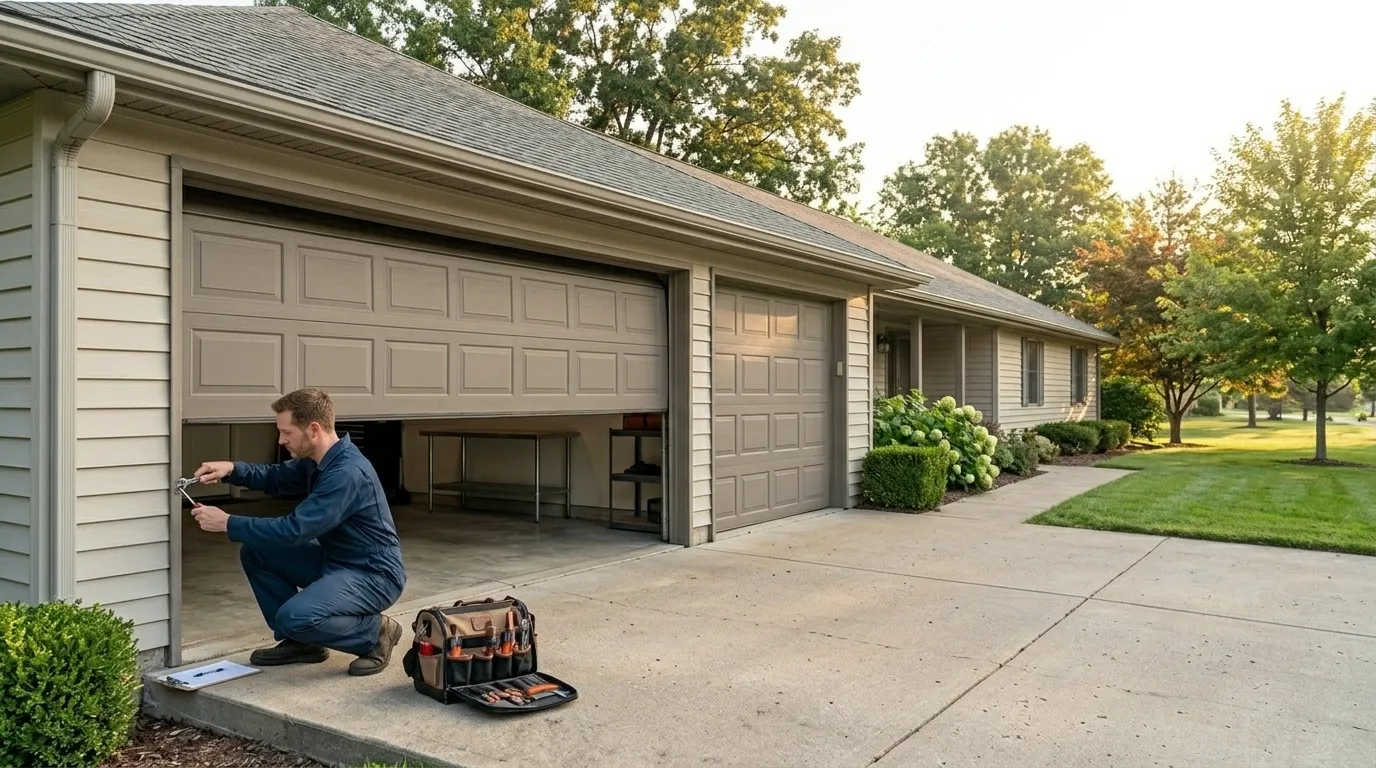
A door installed in the early-to-mid 1990s is old enough to need real work but young enough that most of it is a repair, not a replacement. Steel doors from that era hold up fine cosmetically; what wears out is the moving hardware bolted to them. We're replacing torsion springs that have hit their rated cycles, openers whose logic boards or drive gears have finally quit, and track that's gone slightly out of true from decades of the door running on it. Cedar Mill's climate band is mild with occasional freeze, so we're not fighting the kind of extreme cold-weather metal fatigue you'd get further inland, but a hard freeze snap can still stiffen old grease in a spring that was already close to failing. The honest limitation: if your opener is original to a 1990s build, parts for some of those older logic boards are getting hard to source, and at some point replacing the whole unit costs less than chasing a part that's been discontinued.
Cedar Mill's homes were mostly built later than the service-area median of 1982 - the local median here runs closer to 1992, a full decade newer. That decade matters more than it sounds like it should. Doors and openers installed after the mid-80s were built to different spring-wind standards and came with photo-eye safety sensors as standard, not retrofit. Roughly 6,578 households sit in this area, with median income around $167,037, well above the $102,931 median across the wider service area. Higher household income here tends to show up in the calls too - more requests for insulated doors and quieter belt-drive opener upgrades, fewer emergency spring calls where a homeowner's been living with a grinding door for months before calling.
Within a few miles you get a real mix. Areas like West Slope and Cedar Hills sit close by and share a similar build era, while parts of the broader service area toward Northeast Portland and Buckman carry housing stock going back to the 1960s and earlier. That split is why we don't treat every call the same way. A door in a Cedar Mill garage built in 1991 usually needs a spring, a roller set, or an opener board - a straightforward job. A door in an older section of the coverage area might need the jamb rebuilt before a new door will even hang square. Knowing which decade a neighborhood was built in tells us what's in the truck before we knock on the door.
Most homes here were built around 1992, so if the door hasn't been replaced, it's likely original steel sectional hardware from the early 90s. That's old enough for springs and openers to be near or past end of life, but the doors themselves usually still hang fine.
No. We're based in Portland and drive out to Cedar Mill, about 7 miles away, for service calls. We don't keep a depot or staff on-site in the area.
Some logic boards from that era are discontinued, and once a part's gone, we can't source it. At that point a new opener costs less than the labor to keep chasing a dead part, and you get modern safety sensors as a bonus.
Yes. The area sits in a mild climate band with occasional freezes, and cold snaps stiffen old grease in a spring that's already near its cycle limit. It's rarely the sole cause of a break, but it can be what pushes a tired spring over the edge.
Call now or request a free quote - same-day service on most repairs, upfront written pricing.