Jennings Lodge sits about 10 miles south of Portland, and the calls we get from this area skew toward doors that have been in place a long time. With a median build year around 1975, a lot of the original hardware is still hanging on - torsion springs that have cycled tens of thousands of times, rollers worn down to the bearing, and openers that were installed as a second or third owner upgrade sometime in the 80s or 90s. We see fewer brand-new installs out here than we do closer to the city, and more repair calls on doors that were built solid the first time but are due for a spring swap or a track realignment. That's the pattern: fix what's there rather than replace it, until the door itself tells you otherwise.
Because the area is 10 miles out, we plan the trip as part of a Portland-based route rather than treating it as a walk-up job, so we ask a few questions up front about the door's age and symptoms before we load the truck. That saves everyone a wasted trip and gets the right springs or opener parts on board the first time.
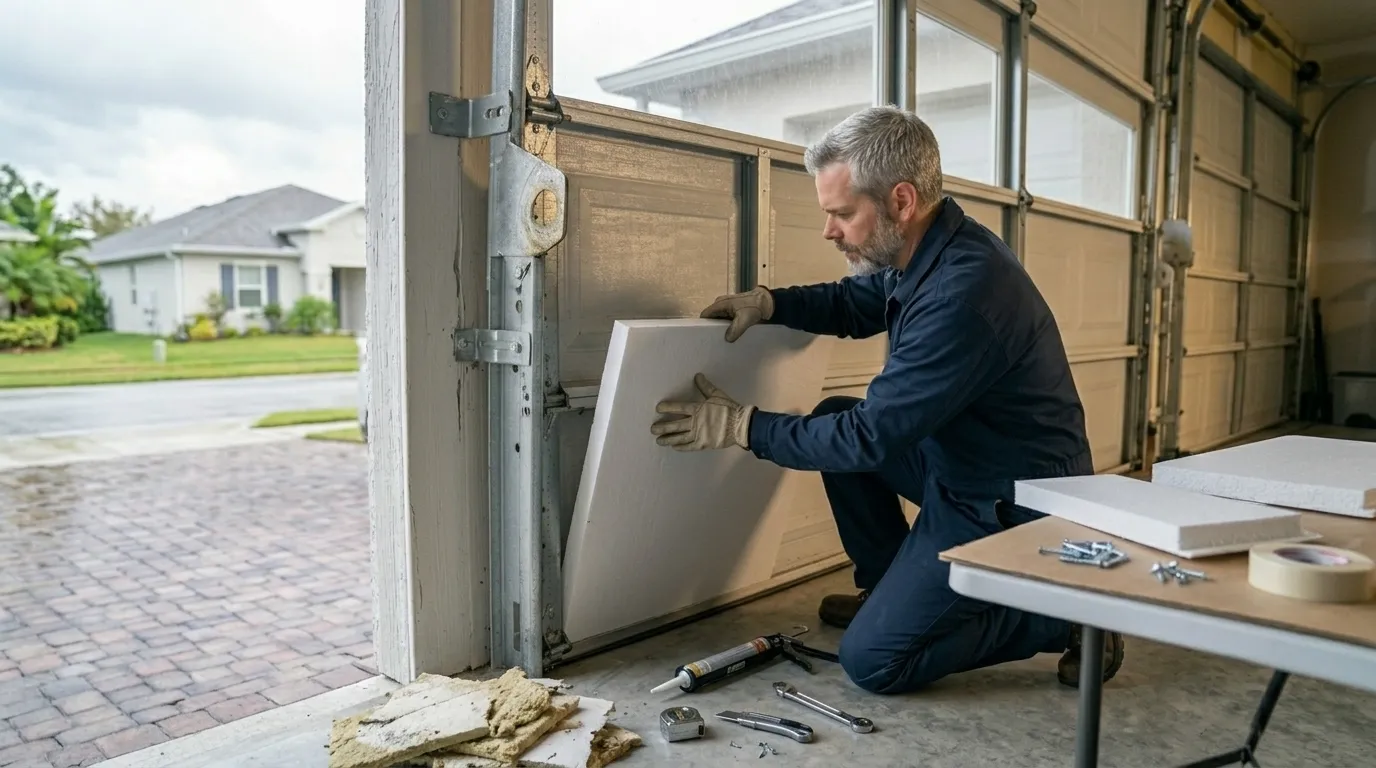
A door installed around 1975 was almost certainly built with an extension spring system or an early torsion setup, single-panel steel or wood-composite, and hardware sized to specs that have since changed twice over. When a spring breaks on one of these doors, the replacement often isn't a straight swap - the drum size, the wind, or the mounting bracket may not match what's sold today, and we carry stock sized for both older and current setups for that reason.
Openers are the other common issue. A door from the mid-70s has usually had at least one opener replacement already, sometimes two, which means the drive system on it may be newer than the door itself. That mismatch is where we find worn-out rail brackets or force settings that were never adjusted for the actual weight of the panel. It's honest work, not glamorous: a lot of what we do in Jennings Lodge is bringing an opener's settings back in line with a door built decades before it, rather than selling a full replacement that isn't needed yet.
Across the wider service area - which includes places like Milwaukie and Oak Grove within a few miles of Jennings Lodge - the housing stock generally runs from 1964 to 2006, with a median around 1982. Jennings Lodge itself sits a few years earlier than that median, closer to the mid-1970s, which puts a meaningful share of its garage doors in the pre-insulated, single-layer steel category rather than the double-layer or insulated panels that came standard later.
With roughly 3,482 households in the immediate area and a median income near $67,164, this isn't a market where wholesale door replacement is the norm - it's one where a well-timed repair keeps a serviceable door running for years longer. The region overall sits in a mild climate band with occasional freeze, which is gentler on hardware than harsher climates, but original rollers and cables from the 70s are still original rollers and cables, freeze or no freeze.
Not every door in Jennings Lodge is original. Some homes have had full replacements, especially where a previous owner dealt with storm damage or simply wanted a quieter door, and those installs usually bring newer torsion systems and better weatherseal. But the split leans older here compared to some of the newer subdivisions closer to Portland proper, and that shows up in the service calls: more spring replacements on original hardware, fewer opener installs on brand-new doors.
One limitation worth saying plainly: if a door out here is down to bare wood rot on the bottom panel or the track is bent beyond adjustment, we're not going to spend an hour trying to coax it back into service just to bill for labor. At that point replacement is the honest answer, and we'll say so. Otherwise, on a door with good bones from the 70s or 80s, repair is almost always the right first move, and that's where most of the work in this area actually lands.
No. We're based in Portland and travel out to Jennings Lodge, about 10 miles south, as part of our regular route. We don't claim a local depot or a guaranteed response window for the area - we schedule the trip once we know what the door needs.
Torsion and extension springs are rated for a set number of open-close cycles, not for calendar years. On a house built around 1975 in this area, the original springs have likely hit or passed that cycle count regardless of how well the door was maintained.
Often, yes. We carry spring and drum sizing for older torsion and extension setups common on houses from the 1970s, not just current-spec parts. If a part is genuinely obsolete we'll tell you before we quote the job, not after.
Depends on the door. If the panel and track are sound and it's a spring or roller issue, repair usually makes more sense given the age of housing stock here. If the bottom panel is rotted or the track is bent, replacement is the better call.
Call now or request a free quote - same-day service on most repairs, upfront written pricing.