North Portland sits about six miles northwest of the center of our service area, in the stretch that runs near Overlook and Sunderland. We don't have a street list or landmark list for this particular neighborhood, so we're not going to pretend we do - no invented cross streets, no made-up business names. What we do have is a good read on the housing stock and the climate that shapes what breaks on a garage door out here.
This part of the district sits inside a service area that covers 243,751 households, with 101,547 of those owner-occupied houses. That's a wide spread of door ages, spring sizes, and opener brands, even within a few blocks. We size the truck and the parts we bring based on what that spread usually means, not on guesswork about any one address.
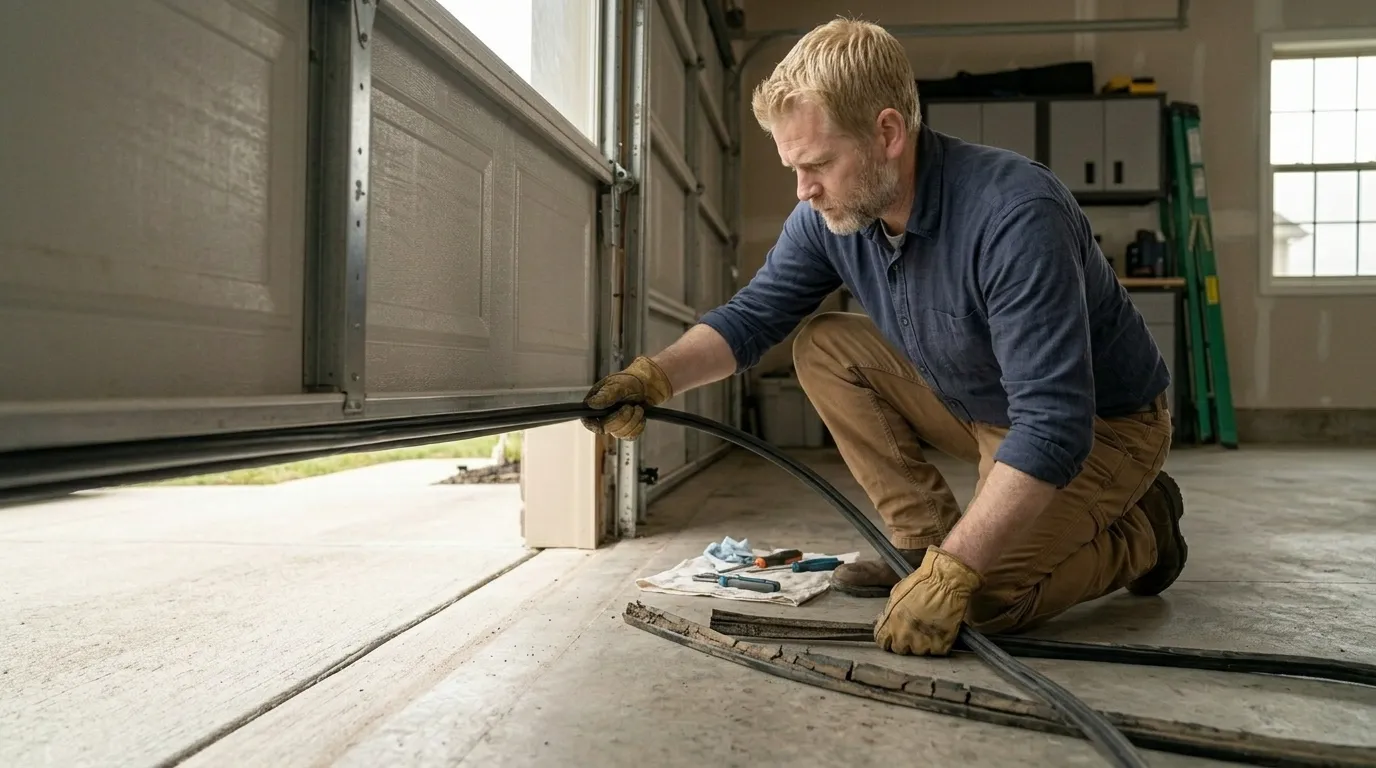
Booking a call here works the same way it does anywhere in the service area: you tell us what the door is doing (or not doing), and we get someone out to look at it. We don't quote a repair over the phone without seeing the spring, the track, or the opener gearing in person - too many failures out here look the same from a description and turn out to be different jobs once we're standing in front of the panel.
If you're dealing with a door that won't move at all, say so when you call. A dead opener and a snapped cable both stop a door cold, but one is a ten-minute fix and the other means the door is under load and shouldn't be forced by hand.
Across this side of the service area, most houses went up between 1964 and 2006, with the typical build year landing around 1982. That range spans a lot of garage door generations - steel sectional doors on extension springs from the early end, torsion setups with chain-drive openers from the middle stretch, and belt-drive units from remodels closer to the 2000s.
Winters here stay mild with only occasional freezes, not the repeated freeze-thaw cycles that crack seals and swell wood jambs every year in colder climates. That's some relief on the door itself, but it doesn't spare the moving parts - rollers and hinges on a door installed in the early 1980s are pushing forty years of cycles, and steel fatigues on a schedule whether or not the weather is hard on it.
With a median household income of $102,931 across the service area, most owners choose to replace a worn spring or opener outright rather than let a door sit broken for months. We see that pattern here as much as anywhere else in the district.
We send a truck out to look at the actual door - the spring, the drums, the track alignment, the opener's gear and motor - before we say what it needs. On a door built during that 1964-2006 window, one honest limitation: some original hardware, especially older extension-spring setups, uses parts nobody stocks new anymore. When that's the case, we tell you straight rather than trying to force a modern part onto a housing it doesn't fit, and we talk through replacement instead of patching something that won't hold.
More often the fix is simpler than that - a spring, a cable, a sensor out of alignment. We just don't guess which one it is until we've seen it.
Not from a description alone. We know the housing era and the climate band for this part of the service area, which tells us what's likely, but a spring, cable, or opener failure can look identical from the driveway. We check the actual door before we name the job or the price.
Depends on the part. Houses in this stretch mostly date from 1964 to 2006, and some original hardware from the early end of that range uses parts that aren't made anymore. When that's true we'll say so and talk replacement - we won't force a mismatched part onto old track just to call it fixed.
Less than a hard freeze-thaw climate, yes - you're not fighting cracked seals every spring. But rollers, cables, and torsion springs wear on a cycle count, not a weather report, so a door installed decades ago is due for attention regardless of how mild the winters have been.
Call now or request a free quote - same-day service on most repairs, upfront written pricing.