Oak Grove sits about 9 miles from Portland, and the work we run out here skews toward repair more than replacement. With a median build year of 1970 for houses in this pocket, a lot of the original garage doors have already been swapped once by a previous owner, but the openers and torsion hardware behind them are often still the second or third generation of parts, not the first. That means broken springs on doors that were never rated for the opener bolted onto them later, worn rollers on track that's been reset more than once, and cables that show fray long before they snap. We also see plenty of calls where the door itself is fine but the opener logic board has quietly failed - common on a stock this age. It's less about storm damage and more about hardware that has simply been in service a long time.
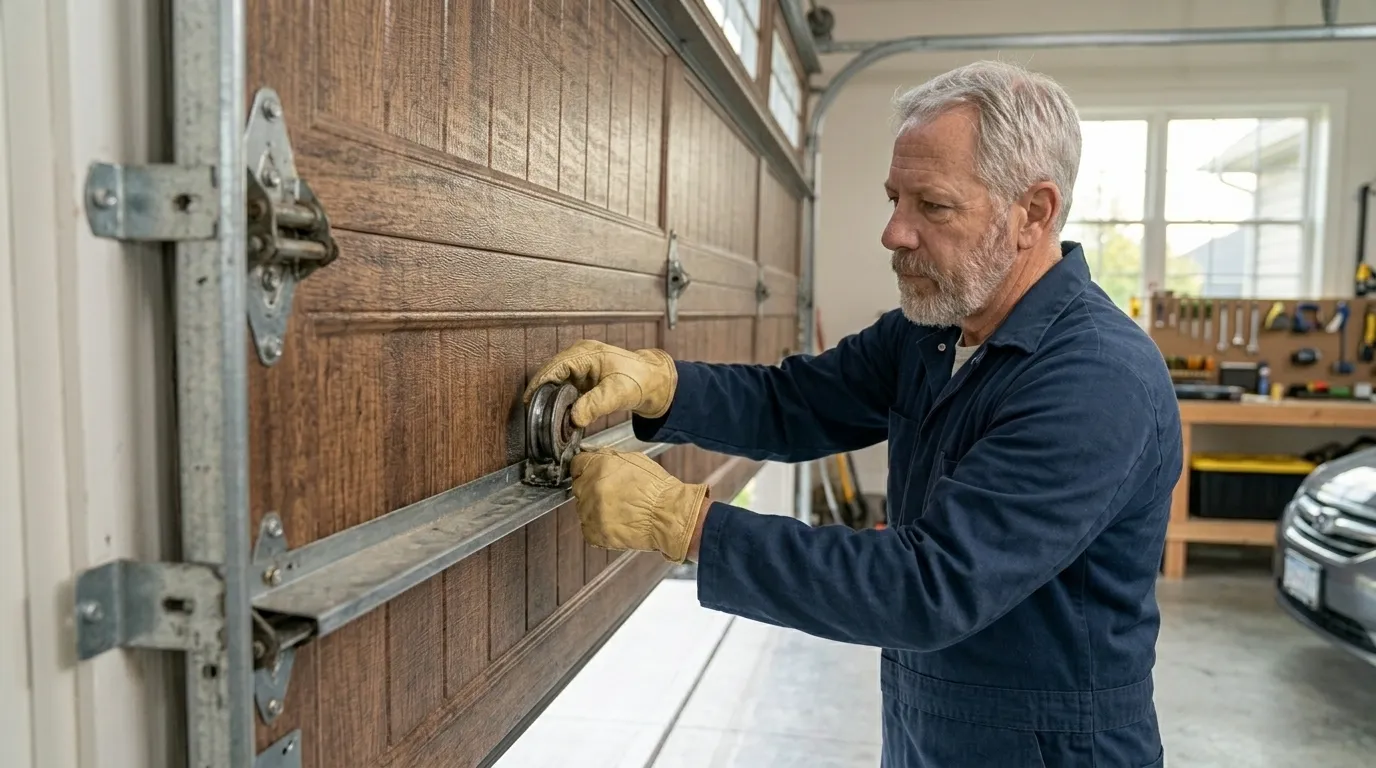
A 1970-built house usually shipped with a single-layer steel or wood door on a basic extension or torsion spring setup, sized for openers that weighed a fraction of what's sold today. When a heavier, insulated replacement door goes on without upgrading the spring and shaft to match, you get an opener straining on every cycle and a spring that wears out faster than it should. We see this pattern often enough in Oak Grove to check it first, before assuming the spring itself is just old. It's a mismatch problem as much as an age problem, and it's the kind of thing that's cheap to fix once someone actually looks for it instead of just swapping the part that failed.
The median year built for homes in this area is 1970, which puts Oak Grove ahead of the wider service area's 1982 median by over a decade. That's meaningful: doors and openers installed or replaced in the 1970s and 80s are now well past any reasonable service life, and a fair number of the tracks and jamb brackets we run into are original to the house, even where the door face has been changed. Around 7,194 households sit in this immediate area, and the climate here runs mild with occasional freeze risk - not the deep-freeze stress that cracks doors elsewhere, but enough cold snaps to seize an ungreased hinge or stiffen a spring that hasn't been serviced in years.
Median household income in this pocket is about $81,611, below the broader service area's $102,931, which tends to show up in how repairs get handled - more owners opting to fix a spring or opener rather than replace a whole door, and that's usually the right call on a door that's structurally sound. The newer infill and remodels scattered through Oak Grove bring in different hardware entirely: steel doors with factory torsion springs sized correctly from the start, and openers with modern safety sensors. The split isn't clean by street or block, so we don't assume anything about a house until we're standing in front of the door. One honest limit: if a torsion spring or track part is old enough to be discontinued, we may need to order it, which can add a day or two to a repair rather than same-visit.
No. We work out of Portland and travel to Oak Grove and the surrounding area, about 9 miles out. We don't claim a local depot or a guaranteed response window - just that we come out to do the job.
It usually means the door was replaced at some point but the spring and shaft weren't upsized to match. This is common where a 1970s house has a heavier modern door installed on original torsion hardware sized for something lighter.
If your home is close to Oak Grove's 1970 median build year and the door hasn't been serviced in a while, there's a decent chance the torsion hardware or track brackets are original. We check before assuming a straight part swap will fix it.
Yes, in a smaller way. The area sits in a mild band with occasional freeze, which won't crack a door the way a hard winter would, but it can stiffen springs or seize hinges that haven't been lubricated in a while.
Call now or request a free quote - same-day service on most repairs, upfront written pricing.