Most of the calls we get from this side of town trace back to one thing: West Linn's houses went up mostly around 1988, a few years later than the service area's overall median of 1982. That matters more than people think. A house built in the late 80s came with a specific generation of door and opener, and those parts are now old enough to fail on a predictable schedule. We see a lot of torsion springs that have simply worn out after three decades of cycles, chain-drive openers with worn gears, and steel sectional doors whose original rollers have gone brittle. It's not random breakdowns - it's the same handful of components reaching the end of their service life at roughly the same time across a lot of houses that were framed in the same few years. With 9,919 households in West Linn and a median income of $138,526 - well above the $102,931 average across our whole coverage area - we also see more owners opt for full door replacement instead of patching an old one along, once a repair starts looking like the second or third one in a few years.
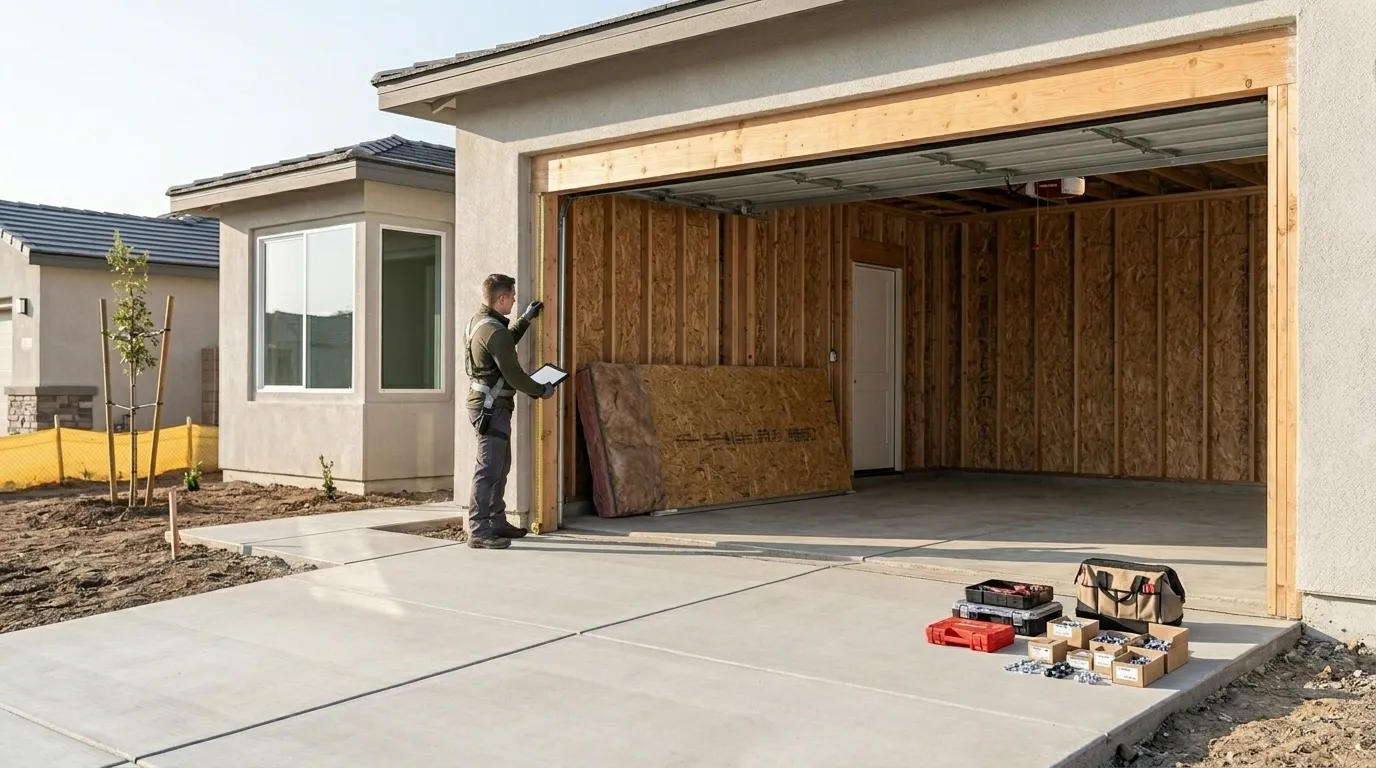
Doors installed around 1988 are steel raised-panel units, usually on extension springs or early torsion setups, paired with chain-drive openers rated for that decade's lighter door weights. None of that is exotic, but a lot of it is discontinued. The steel gauge, the drum size, the exact spring wire diameter - these were common specs in the late 80s and early 90s, less common now that most manufacturers build heavier, better-insulated panels. When a spring or cable on one of these doors fails, we often can't just grab a stock part off the truck; it takes matching wire gauge and drum diameter to the original hardware, which is a different job than servicing a five-year-old door. The honest limitation here: if your opener is original to an 1988-era house, we're not going to pretend a $40 part fixes it. At that age, most of what's inside the unit - the gears, the logic board, the safety sensors - is past rebuilding, and we'll tell you when replacement is the better use of your money.
Across the wider service area, houses were built anywhere from 1964 to 2006, with a median around 1982 and mixed stock from the 1980s and 90s spread across roughly thirty named neighborhoods. West Linn sits on the newer side of that range - its own median build year runs closer to 1988, a real difference from pockets of the region that skew a decade or more older. West Linn is about 12 miles from downtown Portland, which puts it on the outer edge of where we regularly work. That distance doesn't change what we bring on the truck, but it does mean we plan the day's route around it rather than treating it as a quick add-on stop. Climate-wise, the whole region sits in a mild band with occasional freeze, which is gentler on garage door hardware than harsher climates - but it doesn't stop moving parts from aging out on their own schedule regardless of the weather.
In a lot of the service area, you'll find older 1960s and 70s stock sitting right next to houses from the 90s and 2000s, which means a real mix of door generations on the same street. West Linn runs differently - the split here leans newer, with most doors dating from the late 1980s onward rather than clustered in an older band. That's good news in one sense: less pre-1970s hardware to track down. But it also means a lot of houses are approaching the same age threshold at once, which is why we're seeing a cluster of similar service calls - springs, cables, and first-generation openers - rather than a scattered mix of very old and very new failures. If your house here was built later, say in the 90s or 2000s, your door and opener are likely still within a normal service window and the fixes tend to be smaller: sensor alignment, roller replacement, that kind of thing, not full system overhauls.
No, we don't have a location here - we run out of Portland and drive out to West Linn as part of our regular coverage area, about 12 miles from our base. We still bring full stock and tools for spring, opener, and panel work on each job.
Most West Linn houses were built around 1988, and openers from that era are now well past the age where gears, circuit boards, and safety sensors reliably hold up. Once one part starts going, others usually aren't far behind, which is why repeated small repairs often cost more than one replacement.
Often, yes, but it takes matching the wire gauge and drum diameter to your original 1980s-era hardware rather than grabbing a generic modern spring. If the exact match isn't available, we'll walk you through the closest workable option before doing anything.
Depends on the age and what's failing. If your door dates to the late 80s and you're on your second or third repair, replacement usually makes more financial sense long-term. We'll tell you honestly which side of that line your specific door falls on.
Call now or request a free quote - same-day service on most repairs, upfront written pricing.